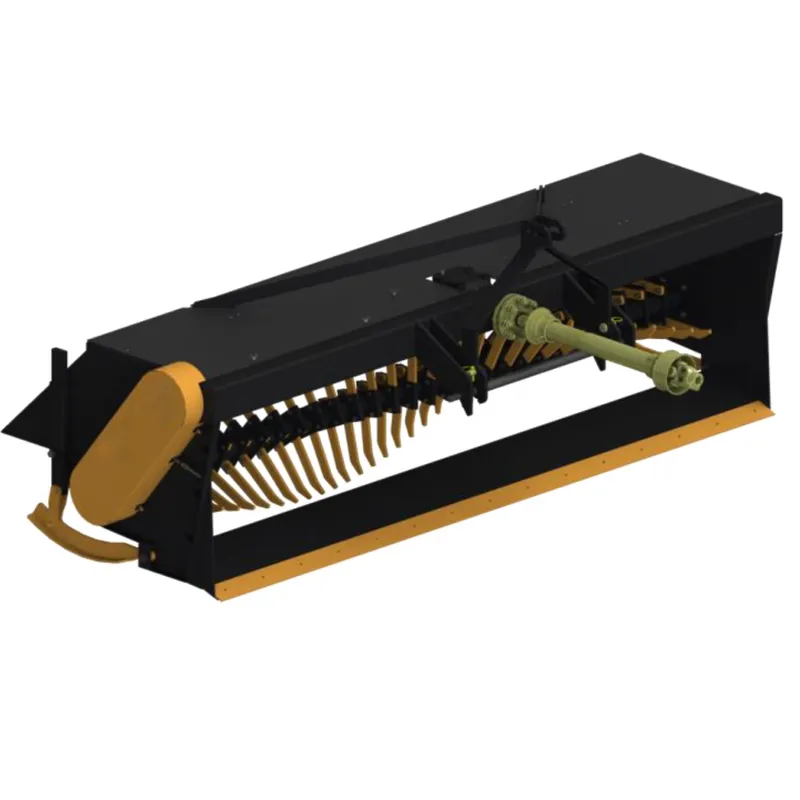
DESTROYER 3.0 Compost Barn for Tractor
Optimize dairy farm efficiency with the DESTROYER 3.0 compost barn for tractor. Featuring 3m working width and 80cm aeration depth for compost bedded pack barns, it requires just 80 HP tractors. Enhance cow comfort and bedding management in your compost dairy barn with this reliable tractor attachment from Mexico Watanabe.
DESTROYER 3.0 Compost Barn Overview
The DESTROYER 3.0 compost barn for tractor represents a specialized agricultural attachment engineered to support modern compost dairy barn operations. Designed for seamless integration with standard tractors, this implement addresses the critical need for consistent aeration and material mixing within compost bedded pack barns. Farmers managing herds in compost pack barn systems recognize that proper bedding management directly influences animal welfare and operational costs. The 3-meter working width and substantial 80 cm depth capability allow efficient coverage across large barn floors, making it suitable for both small-scale compost barn para 30 vacas setups and larger installations handling up to 100 or more animals.
The compost dairy barn attachment transforms daily barn maintenance routines by promoting uniform oxygen distribution throughout the bedding layer. This process accelerates natural composting while maintaining a dry, cushioned surface that reduces stress on livestock hooves and joints. Operators appreciate how the robust construction withstands repeated use in varied conditions, from temperate climates in the United States to intensive dairy regions in Brazil where compost barn brasil designs are increasingly adopted. The result is not only improved herd health but also measurable reductions in bedding replacement frequency and associated labor expenses.
Product Specifications
For any custom requirements, such as modified widths or specialized adaptations for unique compost barn dairy cows setups, please contact our technical team directly. We are ready to discuss tailored configurations that match your exact farm needs.
| Technical Data | DESTROYER 3.0 Compost Barn |
|---|---|
| Weight | 660 Kg |
| Bottom linkage category | 2 |
| Working Width | 3 m |
| Working Depth | 80 cm |
| Tractor requirements | |
| Engine power (min.) | 80 cv |
| Input speed PTO shaft | 540 RPM |
DESTROYER 3.0 Compost Barn Design Features
- Full-Width 3 m Rotor Assembly
The multi-rotor system spans the entire 3-meter working width in a single pass, eliminating the need for multiple overlapping runs through the compost bedded pack barn. This design reduces total aeration time per barn by a meaningful margin and keeps bedding disturbance consistent from wall to wall. Each rotor is independently mounted to absorb uneven floor surfaces without transmitting shock loads to the main frame. - 80 cm Deep Penetrating Tines
Standard compost barn agitators often reach only 40–50 cm into the pack, leaving the lower anaerobic layers undisturbed. The DESTROYER 3.0 drives hardened tines to a full 80 cm depth, disrupting compacted zones, releasing trapped gases, and reintroducing oxygen throughout the entire depth of the compost dairy barn floor. This deeper action is what sustains the thermal activity that keeps bedding genuinely dry. - Category II 3-Point Linkage
Mounting to a Category II 3-point linkage means that most mid-range and large utility tractors already present on the farm can operate the DESTROYER 3.0 without adapter brackets or non-standard hardware. Hitching takes a matter of minutes, and the machine's balanced weight distribution keeps rear-axle load well within safe operating limits even on the 660 kg platform. - Standard 540 RPM PTO Drive
Operating at the universally available 540 RPM PTO speed keeps the DESTROYER 3.0 compatible with virtually every tractor in the 80+ CV class. No gearbox or hydraulic motor conversion is required. The driveline is protected by a shear-bolt slip clutch that limits torque spikes if the tines encounter unexpected hard debris buried in the compost bedding pack barn floor, protecting both the PTO shaft and the machine's internal drivetrain. - Heavy-Gauge Welded Steel Frame
The main chassis is fabricated from thick structural steel sections, continuously welded at high-stress joints to resist the constant torsional loads generated during deep-pack aeration. This is not a lightweight garden-implement chassis adapted for barn use. The DESTROYER 3.0 was sized and rated from day one for the physical demands of operating twice daily inside a working compost barn for years, not seasons. - Replaceable Hardened Tine Tips
Tine tips are the highest-wear component in any bedded pack aeration implement. On the DESTROYER 3.0, each tip is individually removable and replaceable on-site, without the need to remove the rotor assembly or return the machine to a workshop. Replacement tips are produced from wear-resistant hardened steel and are available directly from Mexico Watanabe's spare-parts inventory, keeping unplanned downtime to an absolute minimum.
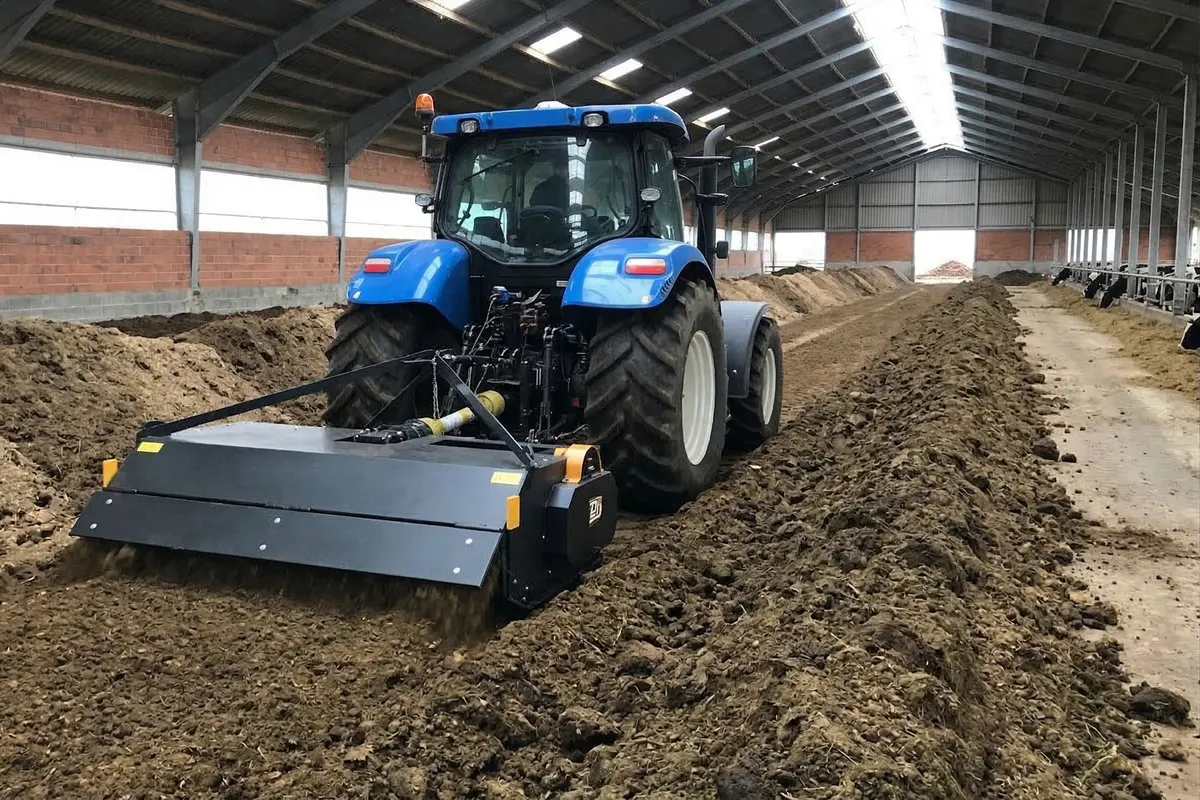
Working Principle of Compost Barn for Dairy Cows
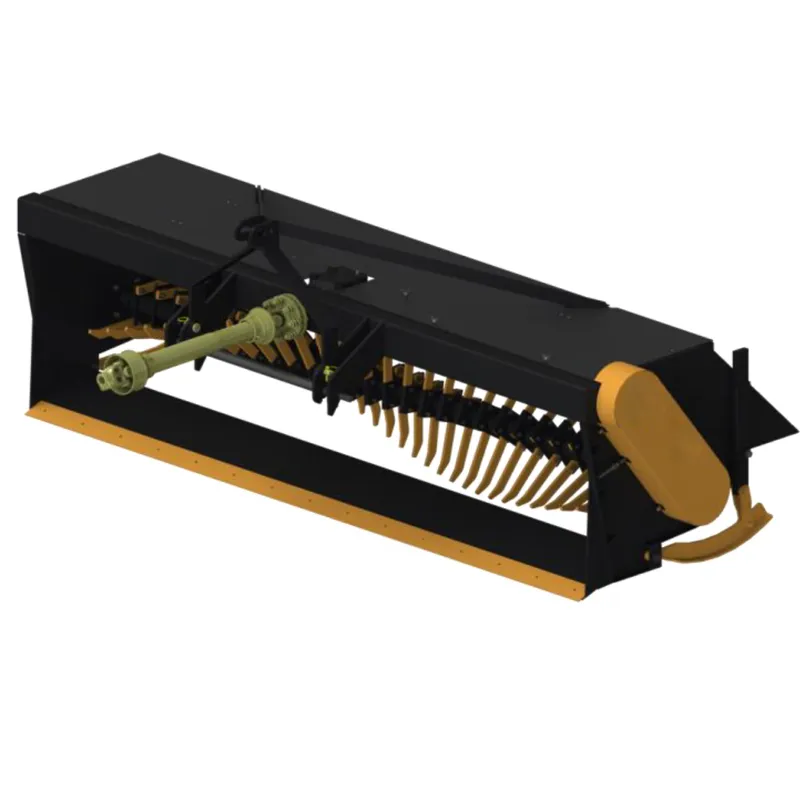
The working principle of the DESTROYER 3.0 compost barn dairy cows relies on a PTO driven rotational system built to deliver reliable aeration and mixing inside compost bedded pack barns. Power comes from the tractor’s standard 540 rpm PTO shaft and travels through a robust, fully protected driveline to reach the main rotor shaft. Spanning the entire 3-meter width, the rotor is fitted with rows of strong, angled tines arranged in a helical pattern.
When the tractor moves forward, the rotating tines enter the bedding pack up to 80 cm deep. They lift, flip, and re-deposit the material in a continuous flow that introduces oxygen at all levels. The helical design creates overlapping action that leaves no untreated sections, effectively loosening compacted material and spreading moisture and finer particles evenly. This deep mixing activates beneficial aerobic microbes that produce heat and drive the composting process forward.
Operators adjust the working depth using hydraulic or mechanical controls to maintain consistent results on uneven barn floors or at different speeds. The Category 2 three-point hitch keeps the 660 kg attachment stable, ensuring the machine’s weight helps the tines penetrate properly without bouncing. After each pass, the change is easy to see the surface becomes loose and airy, improving air flow and drainage immediately.
This compost barn design fits daily routines in both small compost barn setups and larger dairy operations. It pairs naturally with existing ventilation systems, such as compost bedded pack barn fans and helps extend bedding life while supporting animal comfort. The design focuses on effective performance with simple operation, making it a dependable tool for maintaining healthy compost dairy barn conditions season after season.

Applications of the Compost Barn Machine
- Dairy Cattle Housing Management
The DESTROYER 3.0 compost dairy barn is most widely used in dairy cow barns where bedding quality directly affects milk production and udder health. Regular passes across the barn floor keep the organic pack loose, dry, and aerobically active, reducing mastitis risk while giving cows a consistently comfortable surface to rest on throughout the day and night. - Beef Cattle Feedlot Bedding Management
The DESTROYER 3.0 compost barn performs exceptionally well in beef cattle feedlots by maintaining proper bedding conditions. Its deep aeration and mixing action prevent excessive moisture buildup and mud formation, supporting better hoof health and promoting steady weight gain through improved animal comfort and hygiene. - Pig Farm Litter Turning and Composting
Pig farmers use the DESTROYER 3.0 compost bedded pack barn to turn and aerate litter effectively in their operations. This consistent mixing accelerates natural composting, controls ammonia odors, and creates a drier, healthier environment that helps reduce respiratory problems and extends bedding life significantly. - Poultry House Bedding Management
In poultry houses, the DESTROYER 3.0 compost bedding pack barn keeps litter well-aerated and prevents caking. By breaking up compacted areas and distributing moisture evenly, it lowers the chances of footpad issues and supports improved air quality for better flock health and performance. - Horse Stable Maintenance
Horse stable owners appreciate the DESTROYER 3.0 compost pack barn for its ability to maintain fresh and loose bedding. The machine quickly removes damp patches through deep turning, reducing the risk of hoof disease and respiratory irritation while providing horses with a clean, comfortable resting area. - Sheep and Goat Barn Bedding Aeration
The DESTROYER 3.0 compost barn machine offers efficient bedding management for sheep and goat barns. Regular aeration keeps the pack dry and loose, helping control moisture and parasites while ensuring these smaller ruminants enjoy a cleaner and more comfortable living space year round.
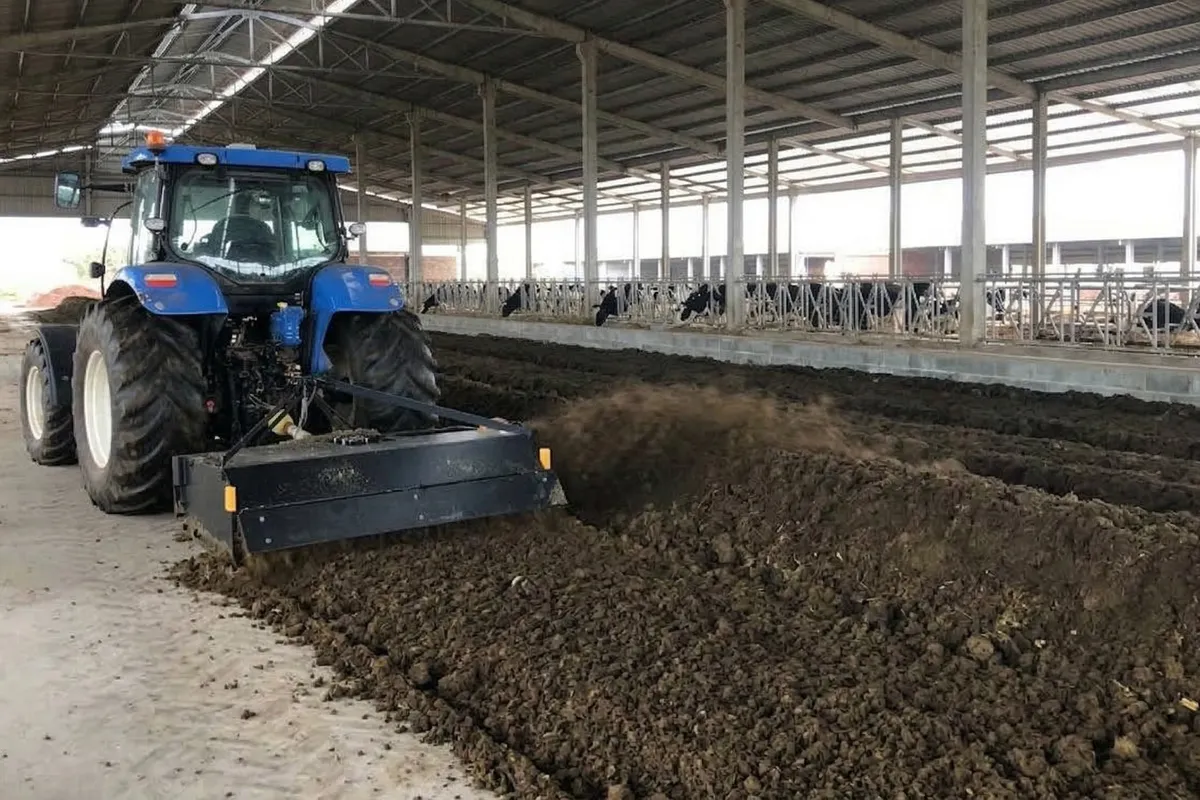
Maintenance Tips for Tractor Compost Barn
Daily attention after each use forms the foundation for keeping the DESTROYER 3.0 compost barn in top working condition. Once finished aerating the pack, take time to remove all accumulated bedding residue from the rotor, tines, and frame using a high-pressure hose or scraper. This prevents material from hardening overnight and causing extra strain on the driveline during the next session. Check all visible bolts, pins, and connections for tightness, and look closely at the tines for any signs of bending or dull edges. A few minutes spent lubricating the grease points on the rotor bearings and PTO shaft protects these critical components from premature wear and ensures smooth operation day after day.
Performing more detailed checks every week or after roughly twenty operating hours helps maintain the machine’s ability to deliver consistent 80 cm depth across the full 3-meter width. Carefully examine the helical tine arrangement for even wear and replace any damaged pieces promptly to preserve effective mixing performance. Verify that the Category 2 hitch points remain secure and that the depth adjustment system moves freely without binding. Pay attention to the overall frame condition, particularly in high-use dairy operations, as early detection of stress points can prevent major repairs later. These routine steps not only extend equipment lifespan but also support reliable performance in compost dairy barn environments of various sizes.
At the end of each heavy use season, conduct a complete service before putting the DESTROYER 3.0 away for storage. Thoroughly clean every part of the attachment, treat exposed metal surfaces with a quality rust inhibitor, and store it indoors or under proper cover to shield it from moisture and harsh weather. Disconnect and properly store the PTO shaft separately, then secure all moving components to avoid accidental damage. Following this seasonal routine keeps the machine ready for immediate use when new bedding cycles begin and helps maintain its value over many years of service in dairy, beef, and other livestock housing applications.
FAQs
Q: What minimum tractor horsepower is required to operate the DESTROYER 3.0 compost barn implement?
A: The DESTROYER 3.0 requires a minimum engine output of 80 CV (approximately 79 HP). This threshold applies under normal working conditions in a well-managed compost bedded pack barn where the pack depth and material density are within typical parameters. If your pack has been neglected for an extended period and is heavily compacted, working at a shallower depth initially and building up to 80 cm over multiple passes will reduce the load on your tractor and protect the driveline.
Q: How often should I aerate the bedding in a compost dairy barn using the DESTROYER 3.0?
A: Best-practice compost bedded pack barn management calls for aeration twice per day — typically once before the morning milking session and once before the afternoon or evening milking. This twice-daily schedule sustains the aerobic microbial activity that generates internal heat, drives moisture evaporation, and keeps the bedding surface dry enough for cows to rest comfortably. In very humid climates, some operators perform a third light pass during peak summer months. Skipping sessions even for a day allows the surface crust to reform, requiring more work and more tractor power to break up on the next pass.
Q: Is the DESTROYER 3.0 suitable for a compost barn para 30 vacas (small herd of 30 cows)?
A: Yes. While the 3-meter working width was dimensioned for larger operations, it works perfectly well in smaller compost barn layouts designed for 30 cows. In a barn sized for 30 head, a single pass from entry to exit and back typically covers the entire floor in under 10 minutes, making the DESTROYER 3.0 extremely efficient even at small scale. Many smaller family dairy operations specifically choose the 3.0 over the 2.0 model because the wider coverage eliminates any strip-overlap management and produces a more uniform aeration result across the full floor area.
Q: Does the DESTROYER 3.0 work in compost barn brasil (Brazilian tropical climate) conditions?
A: The DESTROYER 3.0 has been used in Brazilian dairy operations and other high-humidity, subtropical environments where the compost barn brasil model is growing rapidly. Tropical conditions present a tougher moisture management challenge than temperate climates, and the 80 cm working depth of the DESTROYER 3.0 is a genuine advantage in these environments, reaching moisture layers that shallower implements leave undisturbed. When combined with adequate barn ventilation following compost bedded pack barn fans guidelines appropriate for the local climate, the DESTROYER 3.0 supports functional compost barn operation even in demanding tropical conditions.
Q: What bedding material is recommended for use with a compost bedded pack barn and the DESTROYER 3.0?
A: The most commonly used and most effective bedding material for compost bedded pack barn design is dry wood shavings or sawdust, typically applied at an initial depth of 45–60 cm. Dry straw, rice hulls, and bark chips are also used in various regional contexts, though they tend to produce less thermally active packs than fine wood particles. The DESTROYER 3.0 is fully compatible with all of these materials. Avoid adding wet or green organic matter to the pack, as this depresses microbial oxygen demand and can lead to a cold, wet pack that the machine alone cannot fully compensate for.
Q: How does the Category II linkage on the DESTROYER 3.0 affect tractor selection?
A: Category II is the standard 3-point hitch specification for tractors in the 45–130 HP class, which covers the vast majority of tractors found on dairy farms globally. If your tractor already operates in the 80 CV or above range, it is almost certainly fitted with Category II hitch pins as standard. No adapters, reducers, or alternative hitch pins are required. This broad compatibility is intentional — it means the DESTROYER 3.0 can be integrated into your existing tractor fleet without any capital expenditure on adapters or modifications.
Q: What is the difference between the DESTROYER 2.0 and the DESTROYER 3.0 compost barn models?
A: The primary difference is working width: the DESTROYER 2.0 covers a 2-meter swath per pass, while the DESTROYER 3.0 covers 3 meters. Both models share the same core engineering philosophy, Category II linkage, 540 RPM PTO, hardened replaceable tine tips, and robust structural frames, but the 3.0 is heavier at 660 kg and requires a higher minimum tractor output to operate effectively. For barns up to approximately 40–50 cows where maneuverability inside a tighter building is a constraint, the 2.0 may be preferable. For 60+ cow operations or any layout where floor coverage speed matters, the 3.0 is the more efficient choice.
Q: How should I store the DESTROYER 3.0 at the end of the housing season?
A: At the end of each housing season, clean all bedding residue from the rotor housings, frame channels, and tine assemblies using a pressure washer or stiff brush. Allow the machine to dry completely before applying a light coat of oil or anti-corrosion spray to any bare or exposed metal surfaces, particularly around weld seams and the tine tip mounting seats. Check and top up the gearbox oil, grease all bearing points one final time, and store the implement in a covered location with the tines raised off the ground to prevent ground contact moisture. A brief pre-season inspection and shear bolt check before the next housing period begins will confirm the machine is ready for immediate use.
Customer Reviews
Marcus D., Dairy Farm Manager, Ontario, Canada
"We’ve had the DESTROYER 3.0 running in our compost dairy barn since last spring — that’s about 14 months now. With 90 cows and a 28-meter-wide barn floor, the 3-meter working width lets us finish morning aeration in just three passes per side, around 12 to 15 minutes total. The bedding stays noticeably drier than with the old machine, teat scores have improved, and we haven’t had a single mastitis case we could blame on bedding hygiene."
Franziska Wengler, Farm Owner, Bavaria, Germany
"The ordering process with Mexico Watanabe was smooth and their team responded fast about shipping to Germany. The DESTROYER 3.0 arrived in perfect condition and well-packed. Setup took only 30 minutes the first time, and daily hitching is now just five minutes. Running it on our 110 HP tractor, the 80 cm depth really shows in our compost bedded pack barn — the pack feels better the very next morning."
Brendan Coyle, Owner-Operator, County Tipperary, Ireland
"Honest feedback — the DESTROYER 3.0 Compost Barn for Tractor is heavy and you do need at least 80 HP. I first tried it on a 75 HP tractor and it struggled in deep passes, but switching to our 95 HP unit solved everything. Build quality is impressive and after nine months of daily use in our compost pack barn, it has been completely reliable. Shipping took a bit longer than expected, but the machine arrived flawless."
Rafael Kuczynski, Farmer, Rio Grande do Sul, Brazil
"We've been working with compost barns for three years, and the DESTROYER 3.0 is the best implement we've ever had. Our barn for 120 cows is ready in minutes, even in the wettest seasons. The 80 cm depth makes a real difference in our compost barn. We've already recommended it to two neighbors who are setting up their own compost barn projects."
Helen Ashworth, Herd Manager, Derbyshire, United Kingdom
"Customer service from Mexico Watanabe deserves real praise. A shear bolt failed on a Friday afternoon and I messaged expecting a Monday reply. Instead they answered within hours, sent the exact part specs, and had replacements shipped the next business day. Our DESTROYER 3.0 has run faultless for nine months of twice-daily use in our compost bedded pack barn, with just normal tine wear."
Pieter Van den Berg, Farm Director, Overijssel, Netherlands
"We run a mixed operation with dairy cows and beef finishing, so the DESTROYER 3.0 handles both in our compost bedded pack barn design. Full 80 cm depth twice daily for the dairy section and 60 cm once daily for beef works perfectly without changes. The pack manages moisture so much better that we cut bedding top-ups dramatically, it paid for itself in the first season."
James Thompson, Owner, Wisconsin, United States
"After 16 months using the DESTROYER 3.0 in our compost dairy barn with 85 cows, the 3-meter width and solid 660 kg weight give perfect penetration every pass. We pair it with our compost bedded pack barn fans and the whole system keeps the pack loose and healthy. No breakdowns, easy maintenance, and real savings on bedding replacement, this machine has become essential on our farm."
Sarah Mitchell, Farm Manager, Victoria, Australia
"The team at Mexico Watanabe was fantastic when we needed advice on fitting the DESTROYER 3.0 with our existing compost bedded pack barn fans. After 11 months of daily work in our compost barn, the build quality still impresses me no rust, no issues even in our dusty conditions. Quick replies and helpful support made the whole experience smooth from day one."
Additional information
| Edited by | Yjx |
|---|