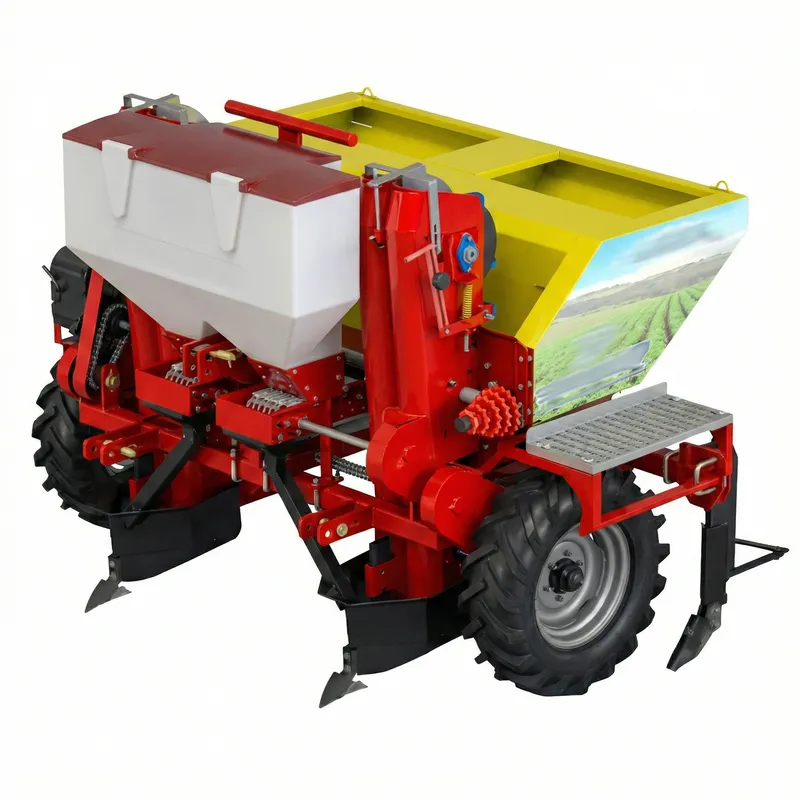
PAI-2100 2-rækket kartoffellægger til traktor
Oplev PAI-2100 2-rækket kartoffellægger til traktor, en robust løsning fra Mexico Watanabe designet til effektiv kartoffelplantning. Denne traktorkartoffellægger har en såtank på 350 kg og en gødningskapacitet på 200 kg, kompatibel med traktorer på mindst 75 hk, der kører med 3-5 km/t for optimal markdækning. Ideel til landbrugsvirksomheder, der søger pålideligt kartoffellæggerudstyr, tilbyder den valgfri insekticidtanke og brugerdefineret rækkeafstand for at forbedre produktiviteten og afgrødeudbyttet.
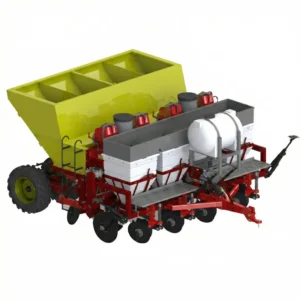
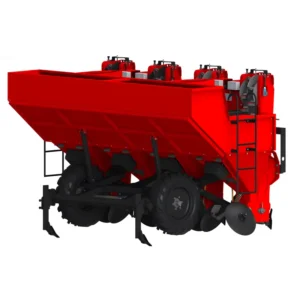
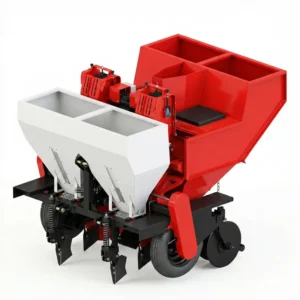
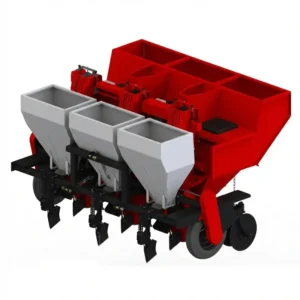
PAI-2100 2-rækket kartoffelsåmaskine oversigt
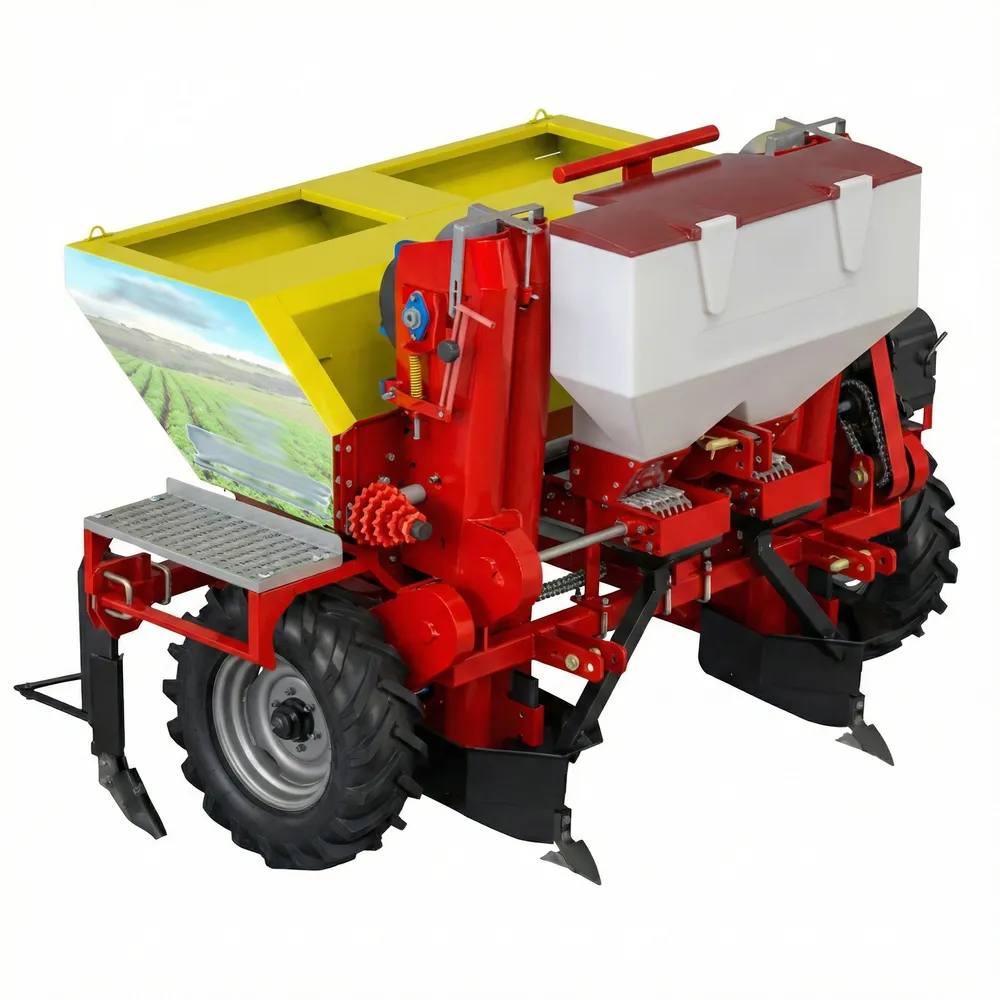
PAI-2100 2-rækket kartoffelsåmaskine til traktor repræsenterer et praktisk fremskridt inden for landbrugsmaskiner, specielt skræddersyet til landmænd, der har brug for pålideligt udstyr til at strømline kartoffelplantningsprocesser. Denne kartoffelsåmaskine, der er produceret af Mexico Watanabe, integrerer holdbar konstruktion med funktionelt design for effektivt at håndtere forskellige jordforhold. Den tilsluttes problemfrit til standardtraktorer via en kategori 2 bundkobling, hvilket sikrer stabilitet under drift. Med fokus på præcis placering af frø minimerer udstyret spild og fremmer ensartet vækst, hvilket er afgørende for at opnå kartoffelhøst af høj kvalitet. Operatører sætter pris på dens enkle betjening, der giver mulighed for justering af frøafstand og -dybde og tilpasser sig forskellige kartoffelsorter såsom russet eller søde kartofler. I marker, hvor manuel plantning er arbejdskrævende, reducerer denne traktorkartoffelsåmaskine tid og kræfter, hvilket gør det muligt at dække større områder i en enkelt overkørsel. Desuden understøtter dens integration af gødningsfordelingsfunktioner øjeblikkelig næringsstoftilførsel, hvilket fremmer en sundere planteudvikling fra starten.
PAI-2100 kartoffellæggeren skiller sig ud blandt kartoffellæggerudstyrsmulighederne på grund af dens balance mellem overkommelighed og ydeevne. I modsætning til basale vertikale kartoffellæggere understreger denne model alsidighed til både små landbrug og større kommercielle virksomheder. Den har plads til valgfrie funktioner som insekticidtanke i 200 l eller 300 l kapacitet, hvilket proaktivt håndterer skadedyrsproblemer under plantning. Den egenvægt på 860 kg giver tilstrækkelig stabilitet uden at overbelaste traktoren, mens arbejdshastighedsområdet på 3 til 5 km/t optimerer brændstofeffektiviteten og jordforstyrrelsesniveauet.
Produktspecifikationer
For eventuelle tilpasningsbehov ud over disse standardspecifikationer, såsom justeret rækkeafstand eller yderligere tilbehør, bedes du kontakte vores team hos Mexico Watanabe for skræddersyede løsninger.
| Tekniske data | PAI-2100 Kartoffellægger |
|---|---|
| Vægt | |
| Tomvægt | 860 kg |
| Kategori for bundkobling | 2 |
| Nummerrækker | 2 |
| Krav til traktor | |
| Motoreffekt (min.) | 75 hk |
| Data | |
| Bunkerkapacitet frø | 350 kg |
| Bunkerkapacitet gødning | 200 kg |
| Tankinsekticid (valgfrit) | 200 liter eller 300 liter |
| Arbejdshastighed | 3 - 5 km/t |
Funktioner ved PAI-2100 2-rækket kartoffellægger til traktor
1. Plantesystem med to rækker
Denne konfiguration muliggør samtidig såning af to rækker, hvilket øger den operationelle effektivitet betydeligt ved at give landmændene mulighed for at dække mere jord på kortere tid sammenlignet med alternativer med én række. De justerbare fureåbnere danner præcist jordkanaler og imødekommer forskellige kartoffelsorter med brugerdefineret dybde og afstand for at understøtte ensartet fremspiring og vækst i forskellige markmiljøer.
2. Holdbar stålrammekonstruktion
Rammen er bygget af højstyrkestålmaterialer og kan modstå krævende landbrugsopgaver i ujævnt terræn og med længere tids brug. Den tilbyder enestående levetid og minimal slitage over flere sæsoner. Dette robuste design sikrer, at udstyret forbliver pålideligt selv under tunge belastninger, hvilket reducerer hyppigheden af reparationer og forlænger den samlede levetid for omkostningseffektivt landbrug.
3. Integreret gødningsdistribution
De indbyggede beholdere fordeler næringsstoffer jævnt direkte ved siden af frøene under plantning, hvilket letter hurtig roddannelse og bidrager til stærkere og mere produktive planter fra de tidlige stadier. Denne funktion eliminerer behovet for separate gødningsgange, hvilket sparer tid og ressourcer, samtidig med at den fremmer en afbalanceret jordnæring, der er skræddersyet til kartoffelafgrødens behov.
4. Forbedrede sikkerhedsmekanismer
Med indbyggede beskyttelsesskærme omkring bevægelige komponenter og brugervenlige læsseområder prioriterer plantemaskinen operatørbeskyttelse ved at minimere eksponering for farer under rutinemæssige opgaver. Disse elementer muliggør sikker håndtering og justeringer, hvilket gør maskinen velegnet til længerevarende feltarbejde uden at gå på kompromis med personalets velbefindende eller overholdelse af standard sikkerhedsprotokoller.
5. Valgfri insekticidpåføring
Dette system, der fås med tanke i 200-liters eller 300-liters kapaciteter, leverer målrettet skadedyrsbeskyttelse i plantningsfasen, hvilket reducerer afhængigheden af behandlinger efter fremspiring og hjælper med at beskytte unge planter mod almindelige trusler. Det integreres problemfrit i plantningsprocessen og tilbyder fleksibilitet for regioner med varierende insektpres til proaktivt at opretholde afgrødernes sundhed.
6. PTO-drevet drivmekanisme
Systemet trækker kraft fra traktorens kraftudtag og opretholder en stabil ydeevne på fladt terræn og moderate hældninger, hvilket sikrer ensartet såsædsplacering uanset terrænvariationer. Denne pålidelige fremdriftsmetode understøtter jævn navigation gennem marker, tilpasser sig forskellige jordtyper og bidrager til præcise landbrugsresultater.
7. Justerbar såmængde og dybdekontrol
Førere kan nemt ændre indstillingerne, så de passer til specifikke jordforhold og kartoffeltyper, f.eks. justering af fugtighedsniveauer eller sortsstørrelser for at optimere såningsnøjagtigheden. Denne alsidighed muliggør finjusterede operationer, der forbedrer spireevnen og udbyttepotentialet, hvilket gør såmaskinen tilpasningsdygtig til en række landbrugsscenarier.
8. Trækkraftoptimerede hjul
Hjulene er konstrueret med overlegne grebsegenskaber, forhindrer udskridning og bevarer rækkejusteringen under manøvrer, selv på ujævne eller glatte overflader. Dette designelement forbedrer stabilitet og kontrol, hvilket muliggør effektive vendinger og ligeudkørsel, der minimerer forstyrrelser og understøtter kontinuerlig planteproduktivitet.
Fordele ved at bruge PAI-2100 traktorkartoffellæggeren
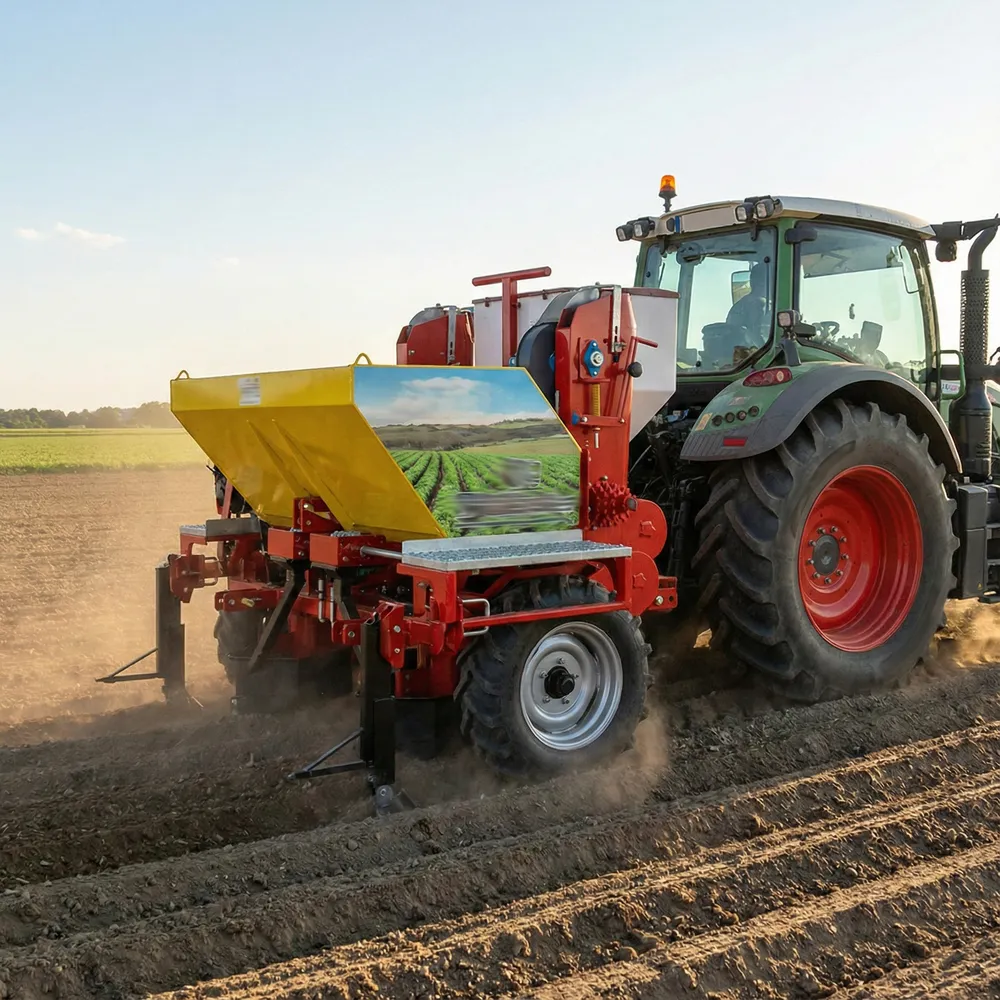
Implementering af PAI-2100 2-rækken kartoffelplantere I landbrugsmæssige sammenhænge giver det betydelige fordele, især med hensyn til driftseffektivitet og økonomisk økonomi. Gennem mekaniseringen af såproceduren reducerer denne enhed markant behovet for manuel arbejdskraft, hvilket gør det muligt for landbrugspersonalet at omdirigere deres indsats mod essentielle aktiviteter såsom vandforvaltning eller afgrødeindsamling. Præcis placering af knolde eliminerer unødvendige overlapninger og hulrum i marklayoutet, hvilket fremmer tættere planteopstillinger og muligheden for øget output pr. arealenhed. Markoperatører har bemærket forbedringer i afgrødejævnheden på op til 20 procent ved overgangen fra traditionelle håndbaserede tilgange til denne traktormonterede kartoffellægger, hvilket resulterer i overlegne kartoffelkvaliteter, der er egnede til kommerciel distribution. Desuden placerer den samtidige tilførsel af gødning essentielle elementer præcist ved planternes rod, hvilket optimerer absorptionshastighederne og begrænser overskydende anvendelse.
En betydelig styrke ved PAI-2100 ligger i dens alsidighed på tværs af forskellige driftsstørrelser, der kan håndtere alt fra beskedne familiedrevne parceller til store industrilandbrug. I modsætning til visse kartoffelplantningsmaskiner, der kræver robuste traktormotorer, fungerer denne model effektivt med enheder med en nominel effekt på 75 hestekræfter eller derover, hvilket reducerer adgangstærsklerne for mindre ressourcekrævende virksomheder. En anden fordel er det optimerede brændstofforbrug, hvor den regulerede hastighed på 3 til 5 kilometer i timen skaber en harmoni mellem omfattende dækning og fornuftig energiudnyttelse. For områder, der er modtagelige for insektangreb, giver det alternative pesticidreservoir en strategisk fordel ved at integrere sikkerhedsforanstaltninger direkte i såfasen, hvilket kan reducere hyppigheden af efterfølgende indgreb og de dertilhørende udgifter.
Derudover fremmer konstruktionen af dette udstyr jordens integritet ved at begrænse forstyrrelser under brug, hvorved jordens sammensætning opretholdes og erosionsfarer mindskes. Sådanne egenskaber stemmer overens med miljøvenlige metoder og tiltrækker producenter, der er forpligtet til langsigtet jordforvaltning. Vedvarende fordele omfatter reducerede vedligeholdelsesudgifter på grund af dens robuste konstruktion, der garanterer ensartet funktionalitet på tværs af successive vækstperioder uden hyppige eftersyn.
I krævende markedsforhold sikrer brugerne sig en konkurrencedygtig position via accelererede såningsfrister, hvilket muliggør hurtig plantning forud for klimatiske ændringer. Denne kartoffellægger, der er tilgængelig til anskaffelse, imødekommer yderligere afgrødevariationen ved at tillade mindre ændringer til håndtering af alternativer som søde kartofler eller lignende rodfrugter, hvilket udvider dens anvendelighed i diversificerede landbrugssystemer.
PAI-2100 bidrager til den samlede landbrugsproduktivitet ved at integrere flere funktioner – såning, gødning og valgfri skadedyrsbekæmpelse – i en enkelt overkørsel, hvilket strømliner arbejdsgange og minimerer traktorens overkørsel hen over jorden. Denne komprimering sparer ikke kun tid, men reducerer også jordkomprimering og bevarer frugtbarheden til fremtidige cyklusser. Brugere i forskellige geografiske sammenhænge, fra tempererede nordamerikanske sletter til subtropiske sydamerikanske terræner, sætter pris på dens tilpasningsevne til forskellige jordprofiler, uanset om det er lertungt eller sandet. Såsædsbeholderen på 350 kg og gødningsbeholderen på 200 kg giver mulighed for længerevarende sessioner uden afbrydelser, ideel til at dække store arealer på en dag.
Hvordan fungerer en kartoffelplantemaskine
- Indledende proces til oprettelse af fure
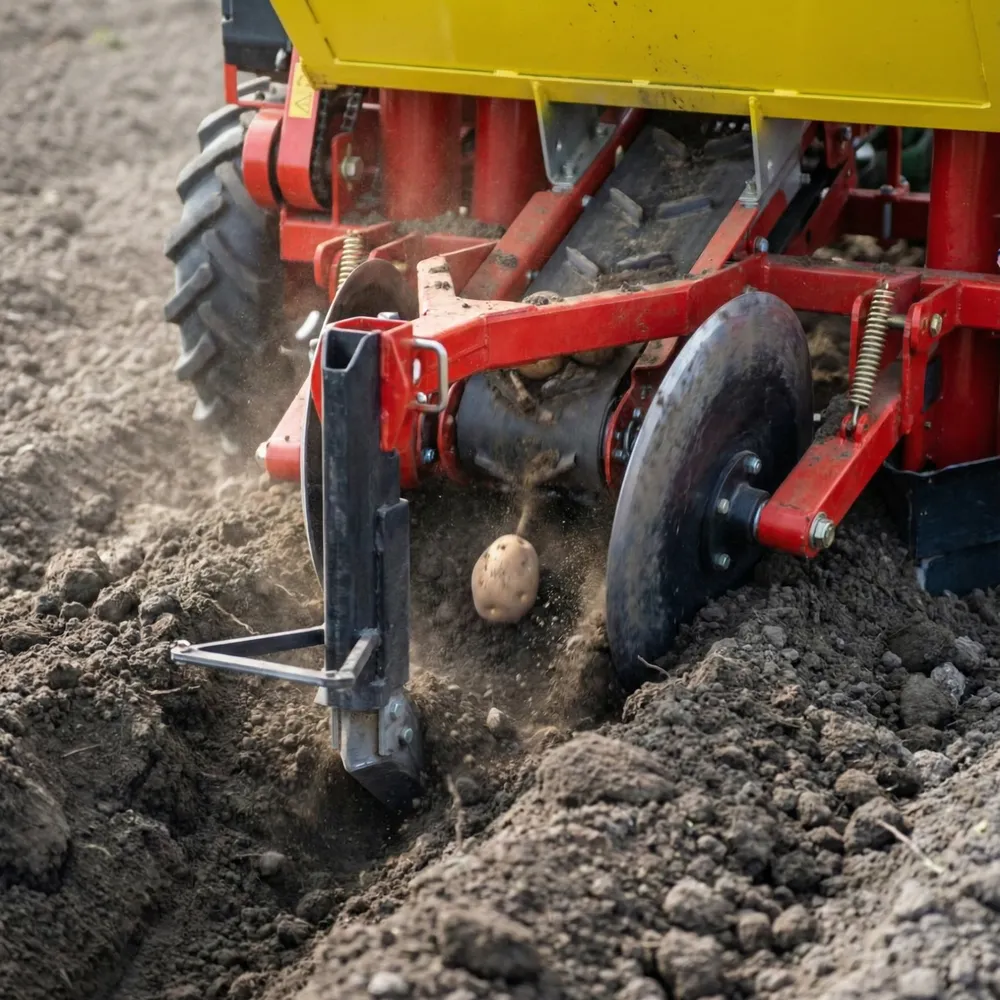
Efterhånden som traktoren bevæger sig hen over marken, skærer såmaskinens fureåbnere, der er sikkert fastgjort til hovedstrukturen, sig ned i jorden og danner jævne, parallelle render til de angivne rækker. Disse åbnere er typisk justerbare, så de passer til forskellige jordstrukturer, hvilket sikrer, at kanalerne er dybe nok til korrekt indlejring af frøene, samtidig med at overdreven forstyrrelse af den omgivende jord undgås, hvilket hjælper med at opretholde markens integritet under arbejdet. - Frødoserings- og placeringsmekanisme
Frøene, der opbevares i bunkeren med en kapacitet på 350 kg, frigives gennem præcist afstemte bægre eller transportbånd, der regulerer flowet, så de enkelte knolde kan falde ned i de forberedte furer med ensartede afstande, som operatøren har fastsat. Denne kontrollerede dosering forhindrer klyngedannelse eller overspring, hvilket fremmer en jævn afgrødefordeling, hvilket er afgørende for at maksimere høstpotentialet i kartoffeldyrkningsopsætninger. - Samtidig gødningsapplikationssystem
Mens frøene falder på plads, kanaliseres gødning fra den 200 kg store tragt gennem tyngdekraftsassisterede rør direkte ned i renderne, hvor den blandes med jorden nær knoldene for at give essentielle næringsstoffer lige ved rodniveau fra starten. Denne integrerede tilgang sikrer øjeblikkelig adgang til vækstelementer, hvilket reducerer behovet for senere anvendelser og understøtter en robust tidlig udvikling under forskellige landbrugsforhold. - Jorddækning og komprimeringsfase
Efter placering af frø og gødning skubber roterende dækskiver eller -plader den forskudte jord tilbage over renderne og begraver indholdet i en standarddybde på 10 til 15 cm, som kan finjusteres baseret på jordens fugtighed eller knoldsortens krav. Dette trin sikrer frøene på plads og komprimerer overfladen let for at bevare fugtigheden og forhindre ukrudtsindtrængning, hvilket bidrager til en vellykket spiring. - Kørehastighedsafhængig køredrift
Hele doserings- og dispenseringsfunktionerne drives af traktorens fremadgående bevægelse, hvilket forbinder mekanismerne med hjulrotation for ensartet ydeevne på tværs af ujævnt terræn uden afhængighed af uafhængige motorer. Denne synkronisering opretholder stabile hastigheder uanset små hastighedsvariationer, hvilket sikrer pålidelighed i forskellige marktopografier og forbedrer den samlede effektivitet for operatører, der håndterer kartoffeldyrkning i stor skala.
Anvendelser af 2-rækket kartoffelplanteudstyr
- Kartoffeldyrkning
I storskala kartoffelproduktionsmiljøer, som dem der findes i USA eller Brasilien, muliggør dette udstyr hurtig dækning af store marker ved at plante to rækker på én gang, hvilket gør det velegnet til sorter som russet eller Yukon Gold i strukturerede rækkesystemer. Dets evne til at håndtere store mængder reducerer den tid, der kræves til forberedelse, hvilket giver operatørerne mulighed for at administrere større arealer med færre overkørsler, hvilket understøtter effektiv høstplanlægning og markedsforsyningskæder. - Dyrkningspraksis for søde kartofler
For sødkartoffeldyrkere kan den justerbare rækkeafstand og dybdekontrol på denne to-rækkede såmaskine tilpasses de større knoldstørrelser, der er typiske for disse afgrøder, hvilket sikrer korrekt placering i jordbund, der varierer fra sandet til leret jord. Denne tilpasningsevne viser sig værdifuld i subtropiske områder, hvor sødkartofler trives, hvilket muliggør ensartet plantning, der fører til ensartet vinvækst og lettere mekanisk høst senere på sæsonen, mens integrerede gødningsmuligheder øger den tidlige næringsstoftilførsel for et robust udbytte. - Hvidløgsplantning i forskellige terræner
Hvidløgsproducenter bruger denne såmaskine til dens præcise såsystem, der effektivt håndterer små løg ved at skabe overfladiske furer, der er egnede til hvidløgets behov for overfladiske rødder, ofte i middelhavs- eller asiatiske klimaer med veldrænet jord. Maskinens stabilitet på ujævnt terræn forhindrer skævhed, og valgfrie skadedyrsbekæmpelsesfunktioner beskytter mod jordskadedyr, der er almindelige for allium-afgrøder, hvilket resulterer i tættere bestande, der forbedrer den samlede løgkvalitet og reducerer manuel udtynding. - Etablering af løgafgrøder
Løgproducenter drager fordel af udstyrets evne til at opretholde ensartet afstand mellem løgplanterne, hvilket er ideelt til både tørre løg- og grønne løgsorter i tempererede zoner som Europa eller Nordamerika. Ved at fordele frø eller skud i forberedte rækker med samtidig gødningspåføring fremmer det en jævn fremspiring og minimerer omplantningschok, hvilket er afgørende for at opnå salgbare størrelser, især i marker, der er udsatte for ukrudtskonkurrence, hvor minimal jordforstyrrelse hjælper med at bevare fugtighedsniveauet.
Ofte stillede spørgsmål
Q: Hvordan forbedrer kartoffellæggeren til traktor effektiviteten?
A: Denne kartoffellægger til traktor strømliner driften ved at mekanisere såningen, hvilket reducerer arbejdskraftbehovet og garanterer jævn fordeling af frø, hvilket potentielt øger produktionen ved at eliminere uregelmæssigheder i rækkelayoutet. Som et alsidigt kartoffellæggerudstyr understøtter den hurtigere markforberedelse sammenlignet med manuelle metoder, hvilket giver landmændene mulighed for at allokere ressourcer til andre vigtige aktiviteter som jordhåndtering.
Q: Hvilken traktorkraft kræves der til PAI-2100 kartoffellæggemaskinen?
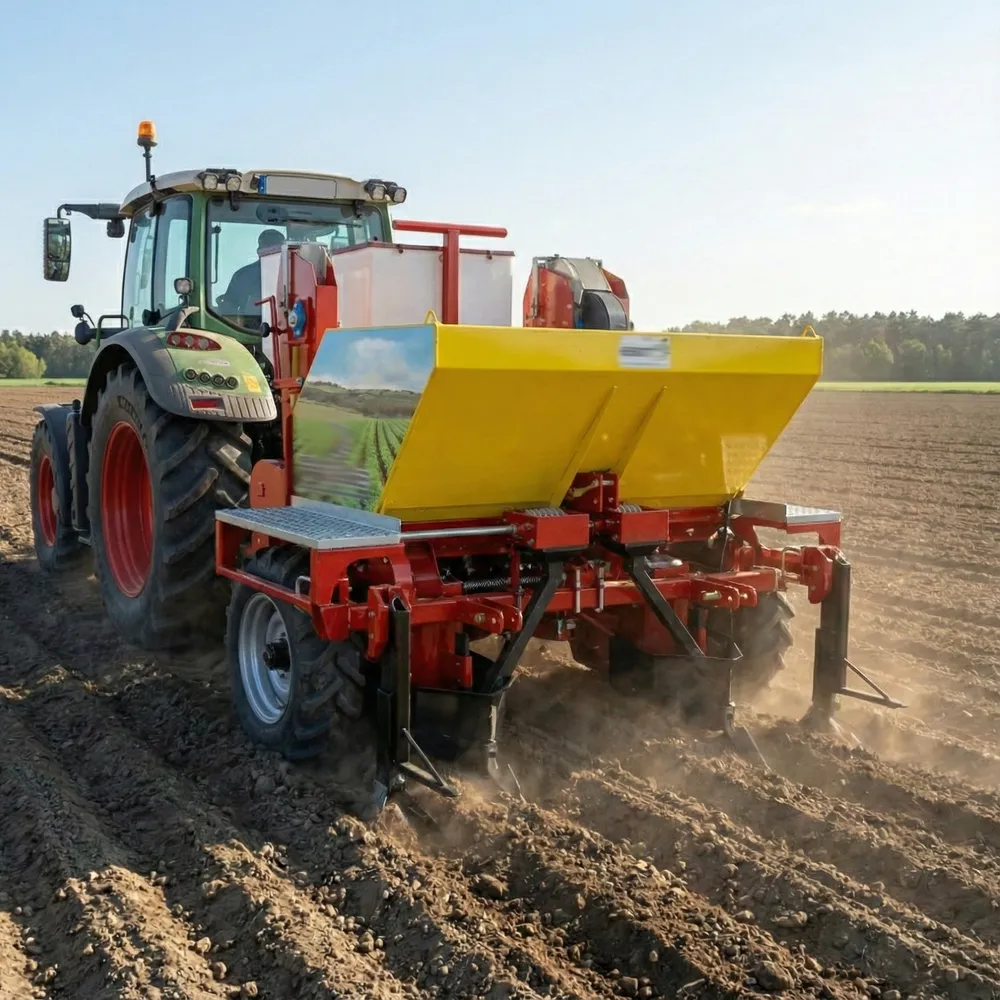
A: Kartoffelsåmaskinen PAI-2100 kræver mindst 75 hk fra traktoren, hvilket sikrer kompatibilitet med adskillige standard mellemstore modeller, der er almindelige i landbruget. Dette krav placerer den som en tilgængelig 2-rækket kartoffelsåmaskine til drift uden avanceret maskineri, hvilket muliggør problemfri integration i eksisterende landbrugsflåder for ensartede såresultater.
Q: Kan den 2-rækkede kartoffelsåmaskine håndtere søde kartofler?
A: Absolut, kartoffellæggeren med 2 rækker tilpasser sig godt til sødkartoffeldyrkning takket være dens justerbare rækkeafstande, som effektivt passer til disse sorters specifikke behov. Den fungerer som en fleksibel sødkartoffellægger og opretholder præcis placering for at understøtte sund vækst, hvilket er attraktivt for avlere, der diversificerer deres knoldafgrøder ud over traditionelle kartofler.
Q: Hvad er arbejdshastigheden på traktorens kartoffellægger?
A: Traktorkartoffellæggeren fungerer optimalt ved hastigheder mellem 3 og 5 km/t og opnår en nøje balance mellem detaljeret dækning og hurtig fremdrift på tværs af marker. Dette tempo gør den til et effektivt valg af kartoffellæggerudstyr til at opretholde jordens integritet og samtidig maksimere den daglige areal, velegnet til både fladt og moderat varieret terræn.
Q: Hvordan vedligeholder man kartoffelplanteudstyret?
A: Vedligeholdelse af kartoffellæggerens udstyr involverer rutineopgaver såsom at fjerne snavs fra opbevaringsrum og forbindelser, påføre smøremiddel på mekaniske dele og udføre visuel kontrol af alle elementer; se altid den medfølgende vejledning for specifikke tidslinjer. Korrekt vedligeholdelse forlænger levetiden for denne kartoffellægger til landbrug, forebygger almindelige problemer og sikrer, at den er klar til sæsonbestemt brug.
Q: Er der en mulighed for insekticid i landbrugets kartoffelplanter?
A: Ja, kartoffellæggeren til landbruget har mulighed for at tilføje insekticidbeholdere med en kapacitet på 200 l eller 300 l, hvilket muliggør kombineret skadedyrsbekæmpelse under såning. Denne funktion forbedrer kartoffellæggerens anvendelighed i områder med insektudfordringer, reducerer behovet for opfølgende behandlinger og fremmer afgrødebeskyttelse fra de indledende stadier.
Q: Hvilke anvendelser passer til kartoffelplanteren?
A: Kartoffelplanteren udmærker sig i scenarier som store kommercielle plantager, beskedne familielandbrug og eksperimentelle landbrugsområder med fokus på kartofler eller sammenlignelige rodfrugter. Som en robust kartoffelplanter håndterer den forskellige plantebehov, fra standard rækkekonfigurationer til specialiserede forsøg, og leverer ensartede resultater på tværs af forskellige produktionsskalaer.
Q: Hvordan installeres den vertikale kartoffelplanter?
A: Installation af den vertikale kartoffellægger kræver fastgørelse via et kategori 2-anhængertræk, der forbinder kraftudtaget og væskeledningerne, efterfulgt af systemkalibrering. Det tilrådes at søge eksperthjælp ved den indledende installation. Denne proces sikrer, at kartoffellæggeren til traktoren fungerer sikkert og effektivt, hvilket minimerer opsætningsfejl til øjeblikkelig markbrug.
Q: Hvilken bunkerkapacitet tilbyder PAI-2100?
A: PAI-2100 har et rum på 350 kg til frø og et rum på 200 kg til gødning, hvilket muliggør længerevarende sessioner uden konstant påfyldning. Disse kapaciteter gør den til en praktisk traktorkartoffellægger til store arealer, hvilket reducerer afbrydelser og forbedrer arbejdsgangen i krævende landbrugsmiljøer.
Q: Er der mulighed for tilpasning af kartoffellæggeren?
A: Tilpasninger til kartoffellæggeren omfatter naturligvis ændringer af rækkeafstande og yderligere udstyr; kontakt vores specialister for personlige konfigurationer. Denne tilpasningsevne gør den 2-rækkede kartoffellægger til en skræddersyet løsning, der imødekommer unikke krav i forskellige landbrugsmæssige sammenhænge for at optimere ydeevne og brugertilfredshed.
Kundeanmeldelser
Rajesh Kumar, landbrugschef, Indien
"Det var smart at skifte til denne kartoffelsåmaskine til vores varierede terræn her – den er robust, og den valgfrie 300-liters insekticidtank har løst vores skadedyrsproblemer uden ekstra sprøjtning. Vi har plantet søde kartofler fejlfrit i to år og sætter pris på den jævne afstand, der øger vores udbytte. Logistikken ankom på bare to uger, hurtigere end forventet, og konstruktionen holder godt under fugtige forhold."
Ivan Petrov, ejer af stor gård, Rusland
"PAI-2100 traktorkartoffellæggeren passer perfekt til vores kolde arbejdsopgaver, da dens 860 kg tunge ramme giver solid stabilitet på frossen jord. Efter 20 måneders brug har vedligeholdelsen været ligetil, og gødningsintegrationen ved en kapacitet på 200 kg sikrer, at næringsstofferne rammer plet for vores russet-sorter. Kundesupporten reagerede hurtigt på vores spørgsmål, hvilket gjorde den til et pålideligt valg af kartoffellæggerudstyr."
Emily Johnson, familielandmand, USA
"Som en mellemstor virksomhed i Midtvesten elsker vi, hvordan denne kartoffellægger, der er til salg fra Mexico Watanabe, passer perfekt til vores 75 hk traktor uden belastning. Det vertikale kartoffellæggerdesign muliggør præcise dybdejusteringer, og vi har set bedre ensartethed i vores opgaver med kartoffelplantere i løbet af det seneste år. Overkommelighed var nøglen, og leveringen var til tiden – ingen klager der."
Hans Müller, afgrødespecialist, Tyskland
"Denne kartoffelsåmaskine til landbrug har imponeret os med dens effektivitet på vores præcise rækkesystemer; hastigheden på 3-5 km/t holder brændstofomkostningerne lave, samtidig med at den effektivt dækker jorden. Vi har med succes anvendt den til forsøg med søde kartoffelsåmaskiner, og efter 14 måneder skinner kvaliteten igennem med minimal slitage. Virksomhedens professionelle holdning under opsætningskonsultationerne blev meget værdsat."
Pierre Dubois, vingårds- og gårdchef, Frankrig
"Integrationen af PAI-2100 2-rækket kartoffelsåmaskinen i vores blandede afgrøder har strømlinet plantningen, især med de justerbare funktioner til forskellige jordtyper. I løbet af 16 måneder har den håndteret vores kartoffelsorter uden problemer, og de hurtige påfyldningsluger sparer tid. Logistikken fra Mexico Watanabe var effektiv og ankom på under en måned, hvilket hjalp os med at nå planteperioden."
Oleksandr Kovalenko, andelslandmand, Ukraine
"I vores kooperativ skiller denne kartoffellægger sig ud ved sin robusthed i ujævne marker – PTO-drevet sikrer ensartet ydeevne. Vi har brugt den i 18 måneder på standardkartofler og bemærket forbedrede udbytter takket være det integrerede gødningssystem. Serviceteamet var lydhøre, da vi anmodede om rådgivning om tilpasset rækkeafstand, hvilket tilførte reel værdi til vores drift."
Anna de Vries, småavler, Holland
"Til vores kompakte jordlodder tilbyder PAI-2100 kartoffellæggeren til traktor stor alsidighed; den er nem at manøvrere, og den 200 kg store gødningstank understøtter vores næringsstoffokuserede tilgang. Efter et års plantning, inklusive nogle eksperimenter med kartoffelplantere til vinstokke, har vi ikke haft nogen nedbrud. Leveringstimingen var perfekt og passede til vores korte vækstsæsonkrav."
Michael Thompson, ranchejer, Canada
"Denne traktorkartoffellægger har været en solid tilføjelse til vores nordlige gårde, hvor den valgfrie insekticidfunktion har vist sig at være essentiel mod lokale skadedyr. Efter at have kørt den i 13 måneder på 80 hk traktorer, har den jævne såsædsplacering øget vores effektivitet mærkbart. Mexico Watanabes logistikteam håndterede grænseoverskridende forsendelse problemfrit og fik den hertil på tre uger uden problemer."
Yderligere information
| Redigeret af | Yjx |
|---|