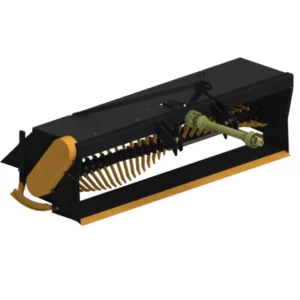
DESTROYER 2.0 Compost Barn for Tractor
Optimize your dairy operation with the DESTROYER 2.0 compost barn for tractor. This reliable 2 m working width attachment reaches 80 cm depth and runs on just 75 HP tractors via Category 2 linkage. Designed for compost bedded pack barns, it delivers consistent aeration that keeps bedding dry and cows comfortable. Trusted Mexico Watanabe engineering ensures years of low-maintenance performance on farms of any size.
DESTROYER 2.0 Compost Barn Overview
The DESTROYER 2.0 compost barn for tractor represents a practical advancement in modern dairy farm management, specifically engineered to support efficient compost bedded pack barn systems. Mounted directly on standard tractors, this attachment transforms daily bedding routines by promoting thorough mixing and oxygenation across large areas. Farmers managing compost dairy barn layouts appreciate how the unit integrates seamlessly into existing workflows without requiring specialized infrastructure or excessive power. Its robust construction reflects years of field-tested development focused on real-world durability, allowing operations to maintain consistent compost quality that directly contributes to healthier livestock environments and reduced labor demands.
The DESTROYER 2.0 compost dairy barn addresses common challenges faced in compost pack barn setups, such as uneven moisture distribution and compacted layers that can harbor bacteria. By delivering controlled depth penetration and consistent rotation speeds, it helps create uniform bedding conditions that support better cow mobility and resting behavior. Operators report noticeable improvements in pack stability after regular use, which aligns well with proven compost barn design principles used across North and South American dairy regions.
Product Specifications
For any custom requirements, such as modified widths or specialized adaptations for unique compost barn dairy cows setups, please contact our technical team directly. We are ready to discuss tailored configurations that match your exact farm needs.
| Technical Data | DESTROYER 2.0 Compost Barn |
|---|---|
| Weight | 460 Kg |
| Bottom linkage category | 2 |
| Working Width | 2 m |
| Working Depth | 80 cm |
| Tractor requirements | |
| Engine power (min.) | 75 cv |
| Input speed PTO shaft | 540 RPM |
Features of DESTROYER 2.0 Compost Barn for Tractor
- 80 cm Full-Depth Penetration
The working rotor reaches 80 cm into the pack on each pass, ensuring subsurface material that has not yet been aerated receives the oxygen exposure needed to sustain active thermophilic composting. Shallow cultivation leaves anaerobic zones that generate ammonia and harbour pathogens the DESTROYER 2.0 compost barn eliminates that risk entirely. - 2-Metre Even Coverage Width
A consistent 2,000 mm working width means fewer passes per session, less cumulative tractor travel inside the barn, and a more uniform bedding profile from wall to wall. In a standard compost bedded pack barn layout, this width allows efficient row management with minimal overlap and zero missed strips. - Heavy-Duty Rotor Assembly
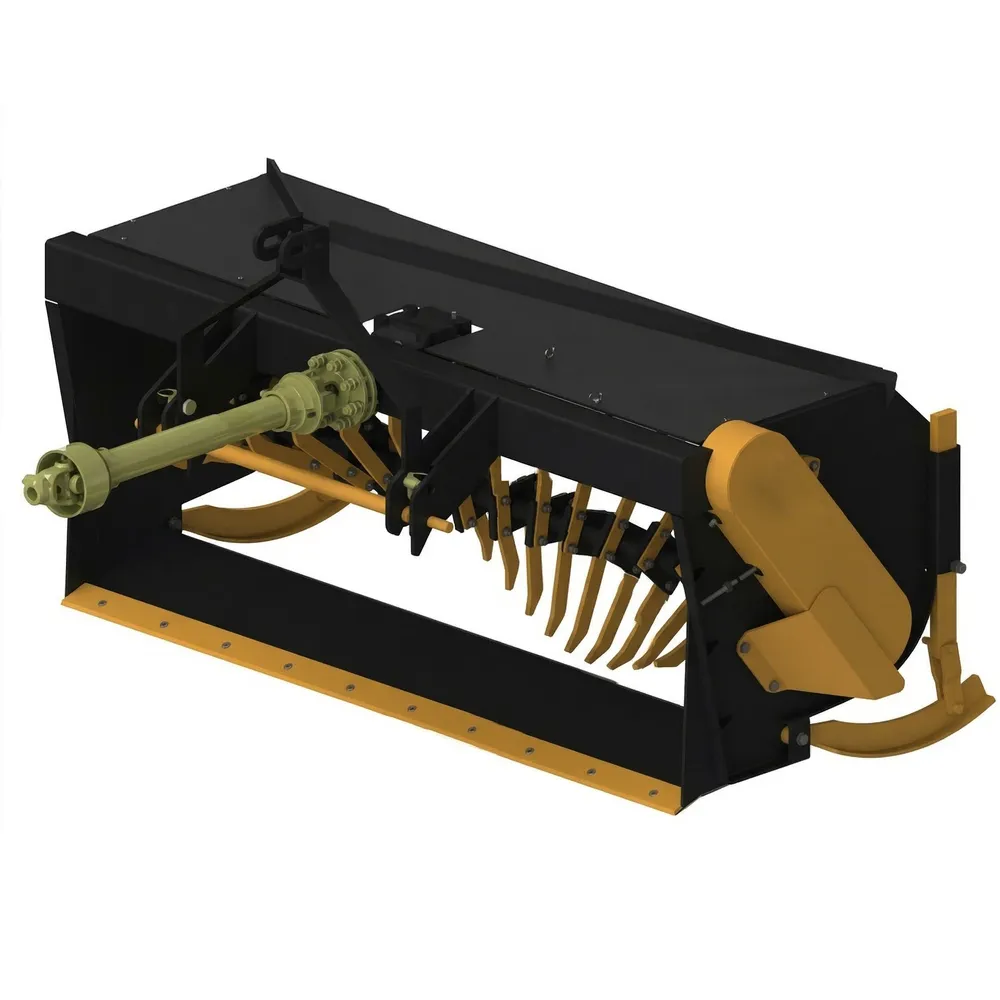
The rotor is constructed from high-tensile steel and fitted with hardened working tips designed to cut through compacted, partially decomposed bedding material without wrapping or stalling. Tip geometry favours a lifting and fracturing action rather than a simple slicing motion, producing the open, crumbly surface texture that promotes rapid moisture evaporation. - Category 2 Three-Point Linkage
Standard Category 2 hitch compatibility means the DESTROYER 2.0 compost dairy barn connects directly to the vast majority of agricultural tractors in the 75–150 cv range without adaptor plates or bespoke brackets. Setup time in the field is minimal, and operators familiar with other three-point implements will require no additional training to mount and adjust the machine. - Low Minimum Power Requirement
At just 75 cv minimum, the DESTROYER 2.0 compost pack barn is accessible to compact utility tractors commonly found on smaller dairies and compost barn para 30 vacas operations. You do not need a high-horsepower machine to run it effectively — the rotor's mechanical efficiency keeps PTO demand well within the comfort zone of mid-range tractors. - 540 RPM Standard PTO Interface
The 540 RPM PTO input is the universal standard across global tractor markets, ensuring immediate compatibility without requiring speed converters or gearbox adaptors. This keeps the total cost of ownership low and integration into existing farm machinery inventories straightforward.
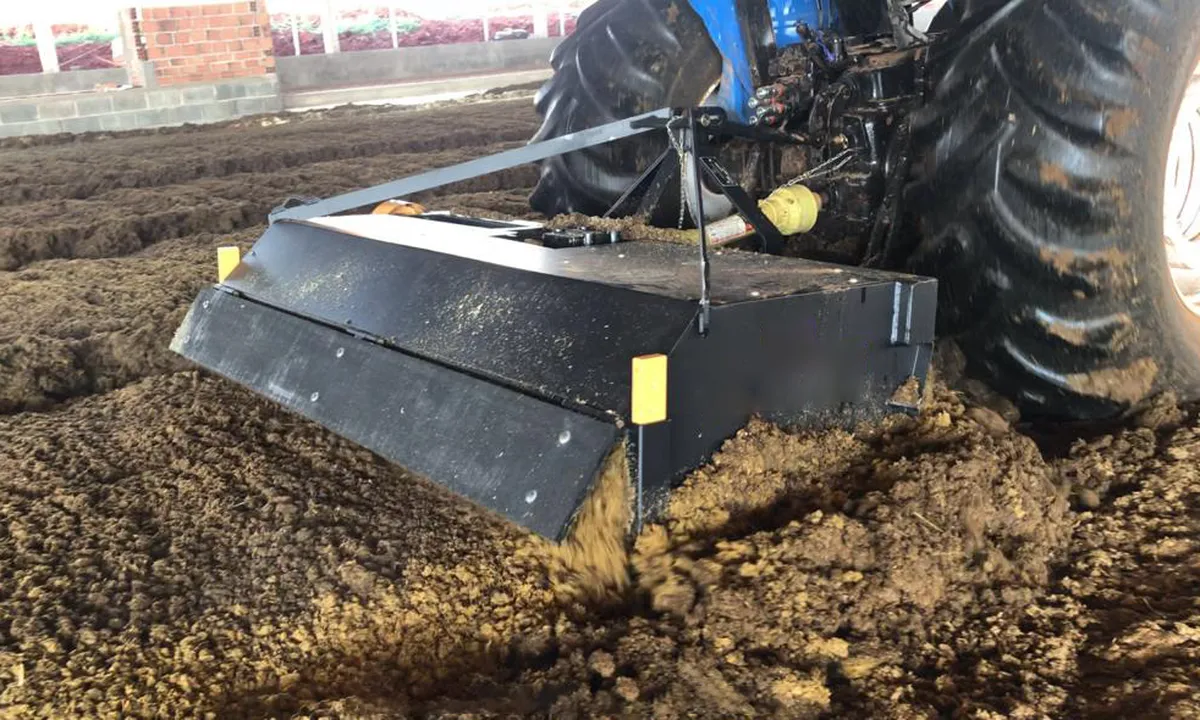
Advantages of Using Compost Barn for Dairy Cows
- Improved Resting Behavior and Cow Comfort
Dairy cows housed in well-managed compost bedded pack barns demonstrate noticeably longer lying times and more natural resting postures. The aerated, cushioned surface created by consistent cultivation allows animals to stretch fully and change positions comfortably. This increased rest supports better rumination, stronger immune function, and reduced stress levels that benefit daily farm operations and long-term cow welfare. - Lower Mastitis Incidence and Better Udder Health
Compost dairy barn systems create drier surface conditions that significantly reduce contact between udders and contaminated material. Regular deep aeration promotes faster moisture evaporation and limits bacterial growth responsible for environmental mastitis. Producers frequently observe lower somatic cell counts and fewer treatment cases after transitioning to properly cultivated compost bedded pack barn systems. - Healthier Hooves and Reduced Lameness Rates
The resilient yet supportive nature of a well-aerated compost pack minimizes hoof trauma and excessive wear compared to concrete or sand surfaces. By preventing prolonged exposure to wet zones, these systems help maintain stronger hoof structure and decrease common issues like digital dermatitis. The result is fewer lame animals and lower associated veterinary costs across the herd. - Cleaner Air Quality with Reduced Ammonia Levels
Effective aerobic composting through consistent cultivation converts nitrogen more efficiently and dramatically lowers ammonia concentrations in the barn air. This creates a healthier breathing environment that benefits both dairy cows and farm workers. Reduced gas levels also contribute to better respiratory health and more pleasant working conditions during daily barn management. - Natural Thermal Regulation in Cold Weather
The biological activity within an active compost bedded pack barn generates steady internal heat that helps cows stay comfortable during colder months. This natural warming encourages extended lying times on the pack even when external temperatures fall. Many operations report improved body condition scores and energy efficiency during winter without relying heavily on supplemental heating systems. - Significant Savings on Bedding Materials
Compost barn systems typically require less frequent addition of fresh bedding because the composting process breaks down and stabilizes organic matter over time. When managed with proper aeration equipment, the pack volume reduces naturally while maintaining quality. This leads to measurable reductions in annual bedding expenses while sustaining excellent cow comfort and hygiene standards. - Enhanced Milk Production and Herd Performance
Cows experiencing greater comfort, drier bedding, and cleaner air in compost dairy barns often show improvements in feed intake, reproductive efficiency, and daily milk yield. The lower disease pressure and reduced stress levels allow animals to direct more energy toward production rather than coping with environmental challenges. These advantages become particularly evident in long-term herd health records.
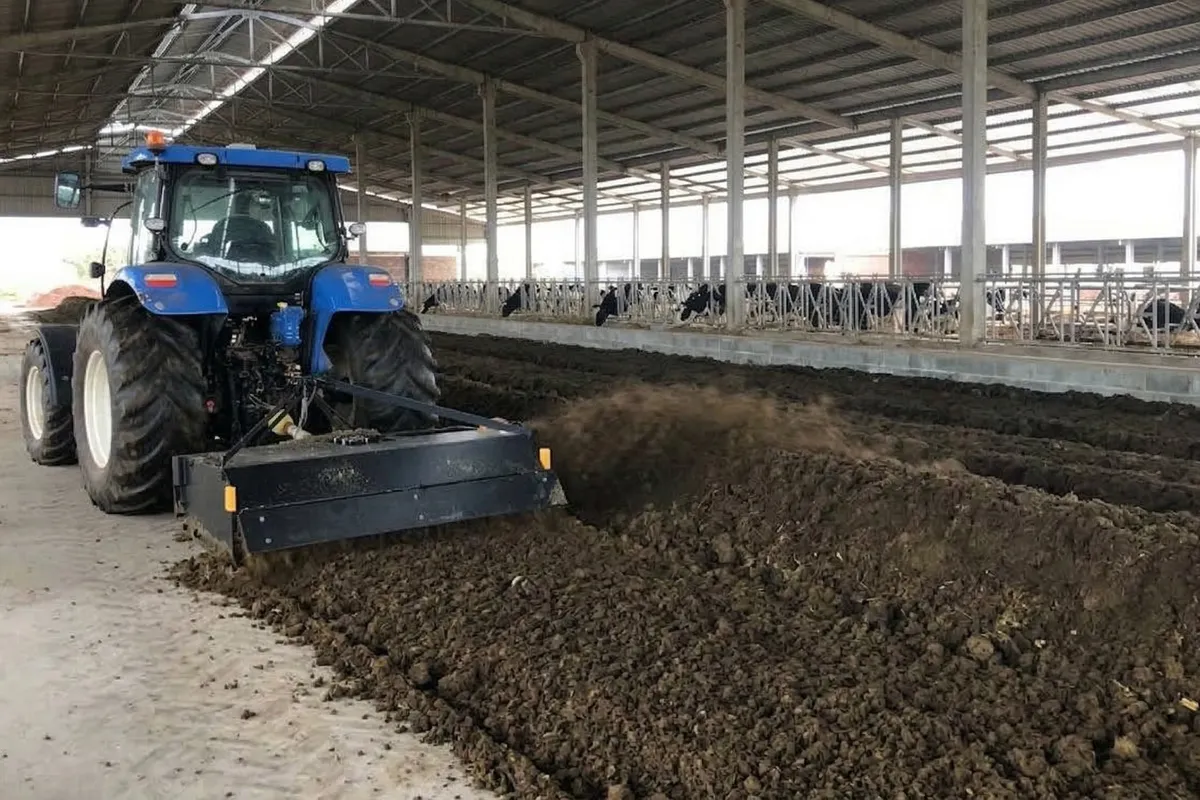
Working Principle of Tractor PTO Compost Barn
The DESTROYER 2.0 compost barn operates through a direct mechanical connection to the tractor's Power Take-Off (PTO) shaft, running at a standard input speed of 540 RPM. This rotational energy from the tractor engine — requiring a minimum of 75 CV — is transferred through the driveline to power the machine's internal working components without any separate motor or external power source.
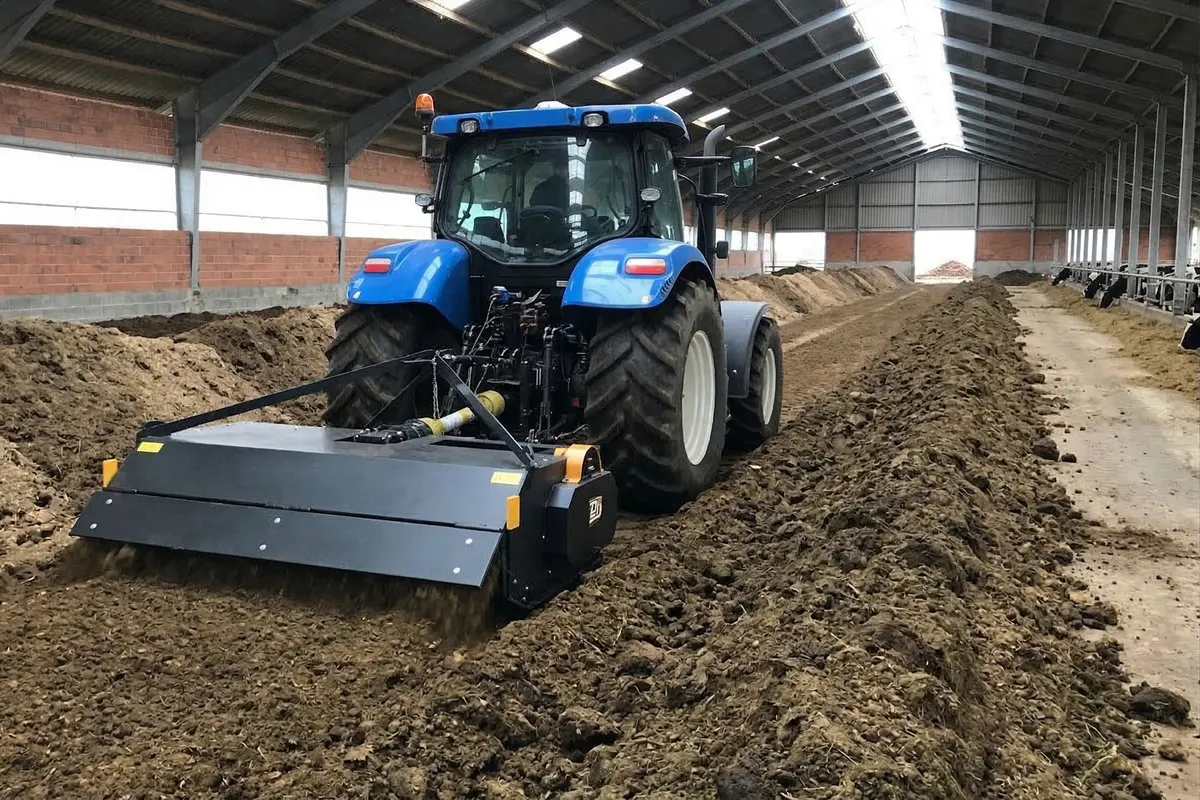
Once engaged, the PTO shaft drives a series of heavy-duty rotor blades or tines mounted within the working chamber. As the tractor moves forward along the barn floor, these rotating elements penetrate the bedding material — typically a mix of animal manure, straw, wood shavings, or other organic waste — to a working depth of up to 80 cm. The aggressive cutting and turning action breaks apart compacted layers, exposes anaerobic pockets to fresh air, and redistributes moisture throughout the mass.
This mechanical aeration is what drives the composting process forward. By repeatedly fracturing and loosening the organic material across a working width of 2 meters, the machine creates favorable conditions for thermophilic microbial activity. Oxygen infiltration accelerates the breakdown of nitrogen-rich waste, raising internal temperatures and speeding up decomposition cycles considerably faster than passive pile management.
The three-point linkage mounting system (Category 2) keeps the unit precisely positioned relative to the tractor, allowing the operator to control working depth and machine attitude from the cab. The compact weight of 460 kg also means the unit can be maneuvered within confined barn spaces without disturbing livestock housing infrastructure.
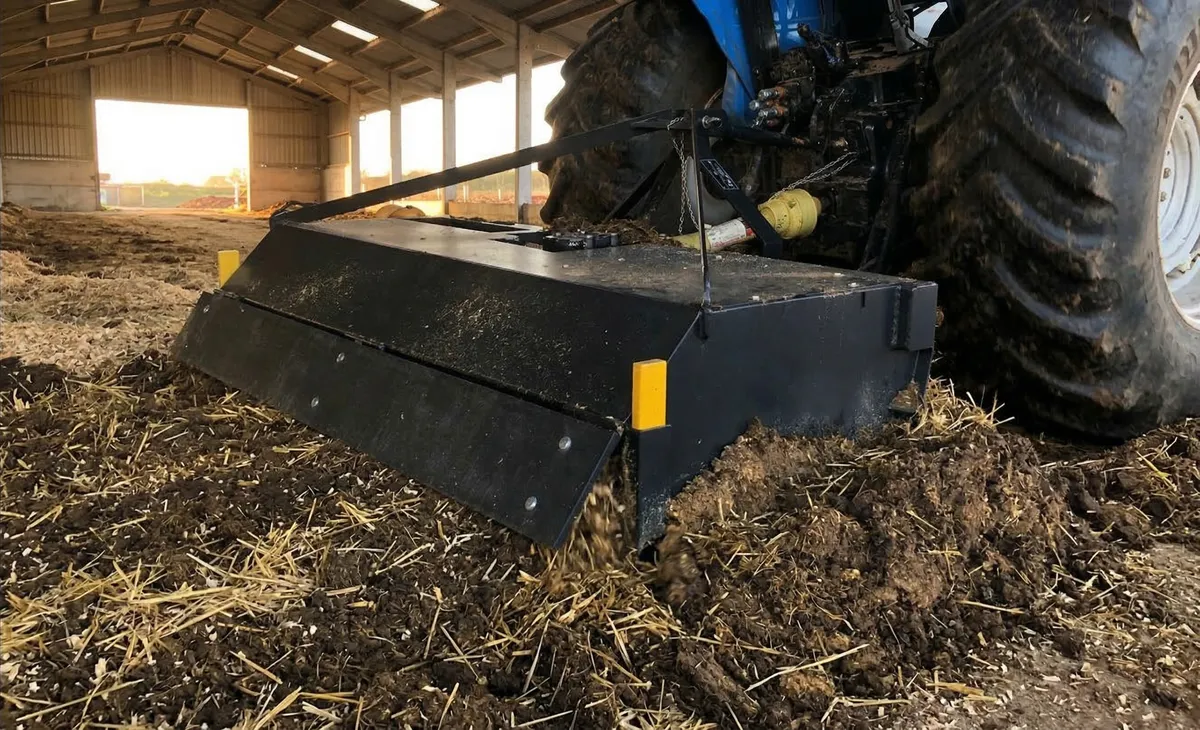
Installation Steps
One of the practical strengths of the DESTROYER 2.0 compost barn is the simplicity of its installation process. The machine uses industry-standard interfaces — Category 2 three-point linkage and 540 RPM PTO — which means most operators with experience connecting any rear-mounted tractor implement will be able to attach the DESTROYER 2.0 without specialist assistance.
1. Pre-Installation Checks
Before attaching the DESTROYER 2.0 for the first time, verify that your tractor's Category 2 lower link arms and top link are in good condition, that the PTO shaft supplied with the machine matches your tractor's output shaft dimensions (both splined and guard compatibility), and that the tractor's hydraulic lift system has sufficient capacity to raise the 460 kg implement clear of the barn floor when repositioning between passes. Most tractors in the 75 cv and above class will have no issues on any of these counts.
2. Attachment Sequence
- Park the tractor on level ground with the barn access aisle clear. Engage the parking brake and switch the PTO off before approaching the implement.
- Align the tractor's lower link arms with the DESTROYER 2.0's Category 2 hitch pins. Use the tractor's linkage control to adjust arm height until the pins can be inserted cleanly without lifting or straining.
- Fit both lower link pin lock clips before making any further adjustments. This is a non-negotiable safety step.
- Connect the top link from the tractor to the machine's top bracket. Adjust top link length to achieve a level working attitude when the implement is at operating depth.
- Connect the PTO driveshaft, ensuring the shaft guard spins freely and the connection at both ends is fully engaged and the retaining collar has clicked into place.
- Before engaging PTO in the barn, do a brief test engagement in an open area to confirm all connections are secure and the rotor turns freely without vibration or noise anomalies.
3. Initial Operating Settings
For first-time use, lower the implement to approximately 40–50 cm depth and make a single pass to assess pack consistency and resistance. If the pack is heavily compacted or wet, beginning at reduced depth and building up to full 80 cm penetration over successive sessions reduces PTO loading and prevents potential rotor tip overload. Once the pack has been conditioned through several aeration cycles, full-depth operation becomes consistently smooth and predictable.
Hydraulic depth control is the recommended method for managing working depth during operation. Use the tractor's position or draft control to maintain consistent penetration across varying pack thickness zones within the barn. Where the pack is thinner near walls or in high-traffic areas, raising the implement slightly prevents rotor contact with the concrete or compacted earth sub-floor beneath the bedding.

Application of Compost Pack Barn
1. Dairy Cattle Housing Management
The DESTROYER 2.0 is most widely used in dairy cow barns where bedding quality directly affects milk production and udder health. Regular passes across the barn floor keep the organic pack loose, dry, and aerobically active, reducing mastitis risk while giving cows a consistently comfortable surface to rest on throughout the day and night.
2. Beef Cattle Feedlot Bedding Maintenance
In beef finishing operations, cattle spend extended periods in confined housing where floor conditions deteriorate quickly under heavy stocking rates. The machine works through compacted manure and straw layers efficiently, restoring airflow to the bedding pack and reducing ammonia buildup that would otherwise suppress feed intake and daily weight gain.
3. Pig Farm Litter Turning and Composting
Deep litter pig systems depend on active microbial breakdown to manage waste volume and control odor. The DESTROYER 2.0 penetrates pig barn floors to the required depth, fracturing dense litter and reintroducing oxygen to restart decomposition cycles, which keeps ammonia and hydrogen sulfide levels within acceptable thresholds for both animal welfare and worker safety.
4. Poultry House Floor Conditioning
Broiler and turkey houses accumulate compacted, high-moisture litter between production cycles. Using the machine to work through this material before restocking reactivates the composting process, destroys caked surface layers, and creates a more uniform moisture profile across the floor directly influencing flock health and reducing footpad dermatitis incidence.
5. Horse Stable and Equestrian Facility Bedding Renewal
Horse bedding requires frequent management to prevent respiratory issues caused by ammonia fumes and mold growth. The DESTROYER 2.0 turns deep straw or wood shaving beds thoroughly, helping stables maintain better air quality at horse-breathing height and extending the usable life of the bedding material before full removal is necessary.
6. Sheep and Goat Barn Floor Maintenance
Small ruminant operations that use deep litter management benefit from the machine's ability to work at controlled depths without over-pulverizing delicate bedding materials. Turning the floor regularly in sheep and goat housing prevents wet spots from forming beneath lying areas, which are a primary source of foot rot and respiratory disease in these species.
FAQs
Q: What is the minimum tractor horsepower needed to run the DESTROYER 2.0 compost barn effectively?
A: The minimum specified engine output is 75 cv (approximately 74 HP or 55 kW). This figure reflects the power required to drive the rotor at full 80 cm depth through normally compacted compost bedded pack barn material. Tractors operating close to this minimum threshold should start each session at reduced depth (around 40–50 cm) until the pack is conditioned, then build to full depth over successive passes.
Q: How often should I cultivate the bedding in a compost dairy barn with the DESTROYER 2.0?
A: Most compost barn dairy cows management guidelines recommend a minimum of twice-daily cultivation — once when cows leave for morning milking and once at evening milking. Once-daily cultivation is workable in lower-stocking-density barns or during cooler, drier seasons when moisture management is less demanding. The key indicator is surface moisture: if the bedding surface feels wet or pasty to the touch when cows return after milking, aeration frequency needs to increase.
Q: Can the DESTROYER 2.0 be used in a compost barn para 30 vacas (small herd)?
A: Yes, absolutely. The machine's dimensions and 75 cv minimum power requirement make it well-suited to the smaller tractor-barn combinations typically found on 30-cow operations. The 2 m working width means a compact compost barn for 30 cows (typically around 200–300 m²) can be fully cultivated in a relatively small number of passes per session, keeping daily management time short even without a dedicated operator.
Q: What type of bedding material works best with the DESTROYER 2.0 compost barn cultivator?
A: The machine is designed to work with the standard range of organic bedding materials used in compost bedded pack barn systems: wood shavings, sawdust, fine wood chips, rice hulls, and chopped straw are all suitable. Wood shavings and sawdust are the most commonly specified materials in compost barn design projects because of their carbon-to-nitrogen ratio and moisture absorption characteristics. The DESTROYER 2.0's rotor geometry handles all of these materials effectively.
Q: How do I know if the compost pack is composting properly after using the DESTROYER 2.0?
A: The most reliable indicator is pack temperature measured at 20–30 cm depth using a long-stem compost thermometer. A biologically active compost bedded pack barn floor should consistently read between 40 °C and 65 °C in the hours following cultivation. Temperatures below 35 °C suggest insufficient aeration, incorrect moisture levels (too dry or too wet), or a carbon-to-nitrogen imbalance in the bedding material. If pack temperatures are consistently low despite proper aeration with the DESTROYER 2.0, the most common causes are over-saturation of the pack with urine/faeces (indicating the need for additional dry bedding input) or under-stocking (the pack needs cow traffic and heat contribution to activate).
Q: Can I get a customised working width wider than 2 metres for a large compost barn para 100 vacas operation?
A: Yes. Mexico Watanabe offers customisation consultations for non-standard working width requirements. For larger compost barn para 100 vacas facilities and above, a wider working head can reduce the number of passes required per session and lower total daily tractor operating time. Please contact our technical team with your barn dimensions, tractor specifications, and daily management schedule, and we will advise on the most appropriate configuration and provide a detailed quotation for a customised machine.
Q: How do I maintain the DESTROYER 2.0 compost barn for tractor to ensure long service life?
A: Daily post-use rinsing of the rotor and frame removes compacted material that can cause corrosion in compost dairy barn environments. Grease all bearing nipples weekly until fresh grease appears at the seals, and check gearbox oil level monthly. Replace worn rotor tips promptly after 300 operating hours or when penetration becomes uneven. Store the machine under cover during off-season periods and apply a light protective coating to exposed steel surfaces. This routine keeps the attachment reliable year after year.
Q: Does the DESTROYER 2.0 work effectively with compost bedded pack barn fans?
A: Yes, and combining mechanical aeration from the DESTROYER 2.0 with compost bedded pack barn fans represents best practice in modern compost barn design. Activate fans immediately after each cultivation session while the pack surface is freshly opened for maximum airflow penetration. This partnership speeds surface drying, sustains thermophilic temperatures, and reduces ammonia levels across the entire compost dairy barn layout. Many producers in projeto de compost barn projects now plan fan placement around the machine’s 2 m working lanes.
Q: How long does installation and daily setup of the DESTROYER 2.0 Compost Barn take?
A: Most operators complete the full attachment process in under 15 minutes using the standard Category 2 three-point linkage and 540 RPM PTO connection. Align the lower links, secure the pins, connect the top link for level operation, and slide the PTO shaft into place. A quick visual check of guards and grease points finishes the routine. This simple procedure lets farms integrate the machine into existing compost barn dairy cows management without special tools or barn modifications.
Q: What is the difference between a compost barn and a conventional deep-litter barn?
A: A conventional deep-litter barn relies on passive accumulation of bedding with minimal intervention, often leading to anaerobic conditions and higher ammonia. In contrast, a properly managed compost dairy barn uses regular deep aeration like the DESTROYER 2.0 to maintain active aerobic composting. The result is warmer, drier bedding, lower pathogen levels, and noticeably better cow comfort. This active approach aligns with proven compost bedded pack barn design principles used worldwide.
Customer Reviews
Marco A. Ferreira, Dairy Farm Owner, Minas Gerais, Brazil
"We’ve been running our compost barn brasil operation for three years now and tried two other machines before settling on the DESTROYER 2.0 compost barn for tractor. That 80 cm working depth really makes the difference — our pack heats up properly within hours after every session, something the old equipment never managed. With 85 cows in one barn, the 2 m width covers the entire floor in a single direction without leaving any dry strips. Delivery from Mexico Watanabe was quicker than we expected and the import paperwork for Brazil was spot-on. We would order it again tomorrow."
Johnathan Hale, Farm Manager, Wisconsin, United States
"We installed the DESTROYER 2.0 compost barn dairy cows on our 120-cow Midwest dairy eight months ago and it has been a game-changer for our compost bedded pack barn system. The 2 m width and 80 cm depth handle our compost dairy barn layout perfectly with our 85 HP tractor, keeping the pack drier than ever before. No breakdowns, even after tough winters, and the support team answered my first maintenance question the same day. The build quality is exactly what we needed for daily use."
Siobhán O’Brien, Farm Manager, County Cork, Ireland
"Switching to a compost bedded pack barn design two seasons ago had me worried about daily management, but the DESTROYER 2.0 made everything simpler. It hooks up to our 90 hp John Deere in about five minutes and the depth control is straightforward — full depth in the middle and shallower near the walls where the pack is thinner. Our somatic cell count dropped noticeably compared to the old cubicle setup, and the cows look far more comfortable lying down. Build quality has held up with zero replacements needed in 14 months of daily use."
Diego Ramírez Solano, Livestock Consultant, Jalisco, México
"I recommend the DESTROYER 2.0 compost dairy barn to every client starting new compost barn para 100 vacas projects because the specs fit the scale without being oversized. One farmer asked about optimal working depth on a fresh pack and the Mexico Watanabe team replied with practical advice by WhatsApp the same morning — that fast response is rare and really appreciated. The machine is straightforward and solid. The user manual could use a bit more on seasonal checks, but their support team always fills in the gaps."
Thijs van der Berg, Dairy Producer, Overijssel, Netherlands
"Our compost barn para 30 vacas setup is small, yet pack management demands are the same as bigger farms. Before the DESTROYER 2.0 we were turning everything by hand twice a day during peak season — exhausting work. This machine paid for itself in labour savings within eight months. The 540 RPM PTO connection stays clean and secure, and we’ve had no vibration issues in 18 months. Pack temperatures stay steady at 45–55 °C, exactly what you want, and the 2 m width fits our barn lanes comfortably."
Renata Kowalczyk, Agricultural Engineer, Wielkopolska, Poland
"I have specified the DESTROYER 2.0 compost pack barn in three separate projeto de compost barn design projects and every client has given positive feedback. The machine’s footprint and working geometry fit perfectly into standard lane widths, and the Category 2 hitch lets farmers use their existing tractors instead of buying new ones. For barn designers the spec sheet is clear and accurate — what’s listed is what arrives. Mexico Watanabe’s export documents and shipping were smooth on all three orders."
Jonas Klink, Farm Equipment Manager, Baden-Württemberg, Germany
"The rotor tips on our DESTROYER 2.0 started showing normal wear after eight months of twice-daily use in our compost dairy barn — exactly what you would expect at that pace. I contacted Mexico Watanabe for replacements and they confirmed the right part numbers right away and shipped them within a week. No major downtime, which is critical when the machine runs every day. The frame welds look strong, the gearbox has been trouble-free, and our 95 hp tractor still has plenty of PTO power to spare."
Emily Thompson, Herd Manager, Ontario, Canada
"We added the DESTROYER 2.0 compost bedded pack barn to our 65-cow compost bedded pack barn last winter and it has handled the freeze-thaw cycles without any issues. The 80 cm depth keeps the pack biologically active even in -20 °C weather, and the 2 m width lets us finish the whole barn in under 30 minutes. Customer service was outstanding when we needed a spare PTO shield — they shipped it from Mexico with tracking the next day. The cows are noticeably cleaner and our vet bills have dropped."
Carlos Mendoza, Operations Director, Buenos Aires Province, Argentina
"On our 110-cow compost barn para 100 vacas farm the DESTROYER 2.0 compost bedding pack barn has become part of the daily routine. We run it every morning after milking and the compost dairy barn layout stays uniform and dry even during our humid summer months. The Category 2 linkage connects in minutes to our local tractors and the build quality feels built to last. Logistics from Mexico Watanabe were excellent — the crate arrived undamaged and customs clearance took only two days. Great machine, great support."
Additional information
| Edited by | Yjx |
|---|