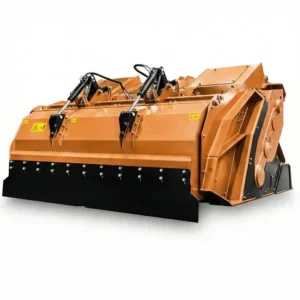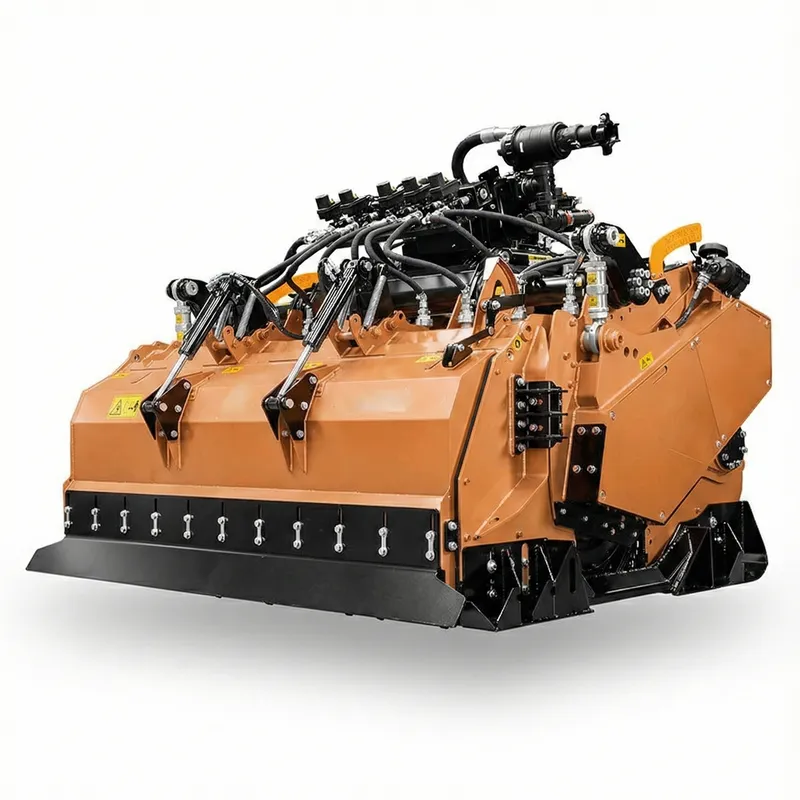
STABI/H Jordstabilisator för traktorer
Explore the STABI/H soil stabilizer for tractors, a durable equipment option for efficient ground preparation in road construction and infrastructure projects. Compatible with 300-500 HP tractors, it achieves up to 56 cm working depth while minimizing fuel use and traction stress. As a reliable soil stabilizer machine for sale from Mexico Watanabe, it boosts productivity with features like variable geometry and anti-clogging systems—contact us for customized soil stabilizer solutions tailored to your needs.
STABI/H Tractor Soil Stabilizer Overview
The STABI/H soil stabilizer for tractors represents a practical choice for professionals handling large-scale ground preparation tasks. This equipment attaches to tractors in the 300-500 horsepower range and reaches depths up to 56 centimeters, making it suitable for stabilizing soil in various construction settings. Operators can adjust the rotor penetration directly from the tractor cab through a hydraulic system, which helps in managing power requirements effectively. By focusing on reduced stress on the tractor and lower energy demands, this soil stabilizer equipment supports extended operations without frequent refueling stops. It incorporates a design that mixes soil evenly, incorporating materials like lime or cement to create stable bases for roads or other structures.
The STABI/H model soil stabilizer machine addresses common challenges in soil stabilization by offering a balance between depth control and machine durability. For instance, in projects involving uneven terrain, the variable chamber allows for precise adjustments, ensuring consistent results across different soil types. This approach not only extends the life of the attached tractor but also aligns with cost-saving measures in fuel and maintenance. As a soil stabilizer attachment, it fits seamlessly into workflows for building highways, parking areas, or industrial sites, where reliable performance is essential.
Product Specifications
These figures demonstrate the equipment's robustness for heavy-duty applications. If your project requires custom adjustments, such as modified tooth setups or enhanced cooling, feel free to reach out to our team at Mexico Watanabe for personalized options.
| Model | STABI/H-225 | STABI/H-250 | STABI/H/HP-225 | STABI/H/HP-250 |
| Tractor (hp) | 300-400 | 300-400 | 350-500 | 350-500 |
| PTO (rpm) | 1000 | 1000 | 1000 | 1000 |
| Working width (mm) | 2293 | 2533 | 2293 | 2533 |
| Total width (mm) | 2664 | 2904 | 2664 | 2904 |
| Weight (Kg) | 7300 | 7450 | 7350 | 7500 |
| Rotor diameter (mm) | 1235 | 1235 | 1235 | 1235 |
| Working depth (mm)(Max. 1 - Max. 2) | 165-560 | 165-560 | 165-560 | 165-560 |
| No. teeth type A/3+STC/3+STC/3/SS | 64+4+8 | 72+4+8 | 64+4+8 | 72+4+8 |
Standard Equipment
| Hydraulic rear Hood with anti-clogging system | Side gearbox with oil cooling system |
| Interchangeable inner antiwear plates in Hardox® | Gearbox with freewheel |
| Enclosed machine body | Gearbox with oil cooling system (STABI/H/HP) |
| Variable displacement chamber | PTO shaft |
| Inside lateral protection | Friction clutches |
| Bolted on protection chains | Bolted-on rotor shafts (in forged steel) |
| Poly-Chain® belts transmission | Adjustable skids |
| Transmission with side gearbox | Dozing blade |
Options
| Multiple tooth options | Water spray system WSS High Flow |
| Hydraulic top link | FCS full control system |
| Dozing blades with spring system | Anti-clogging grille |
Key Features of STABI/H Soil Stabilizer Equipment
- Variable Geometry Chamber
This component allows operators to adjust the rotor's position hydraulically from the tractor cab, enabling exact control over soil penetration depths and ensuring a uniform blend of materials such as lime or cement with the earth. Such precision reduces unnecessary tractor strain and adapts seamlessly to varying ground conditions, ultimately leading to stronger, more reliable stabilized surfaces for construction projects. - Hydraulic Rear Hood with New Anti-Clogging System
Equipped with advanced hydraulic controls, the rear hood prevents material accumulation during operation, which maintains consistent performance even in challenging, debris-heavy environments. This design boosts overall work efficiency by minimizing interruptions and supports reduced energy demands on the tractor, making it ideal for extended sessions in road building or land reclamation tasks. - Solid Mobile Rotor
Constructed for durability, the rotor facilitates effective soil stabilization while requiring minimal power input from the attached tractor, which helps in conserving resources on large-scale sites. Its robust build ensures thorough mixing without excessive wear, allowing contractors to achieve compact, load-bearing layers in diverse soil types ranging from clay to sand. - Cogged Belt Transmission with Reduction Gear Assembly
The transmission system uses durable cogged belts paired with a reduction gear setup to transfer power smoothly from the tractor's PTO, optimizing torque delivery for heavy-duty mixing. This configuration enhances machine longevity by distributing loads evenly and prevents slippage under high stress, proving essential for consistent results in infrastructure development. - Oil Cooling System for Gearbox (STABI/H/HP)
Integrated specifically for higher-power models, this cooling mechanism circulates oil to dissipate heat generated during prolonged use, safeguarding the gearbox against thermal damage. It enables sustained operation in warm climates or intensive applications, thereby extending equipment service intervals and supporting reliable performance in demanding stabilization efforts. - Interchangeable Internal Hardox® Protections
Featuring replaceable plates made from high-strength Hardox® steel, these protections shield the machine's interior from abrasive wear caused by rocks and soil particles. Users can swap out worn sections quickly without extensive downtime, which promotes cost-effective maintenance and ensures the stabilizer remains operational across multiple seasons of rigorous fieldwork.
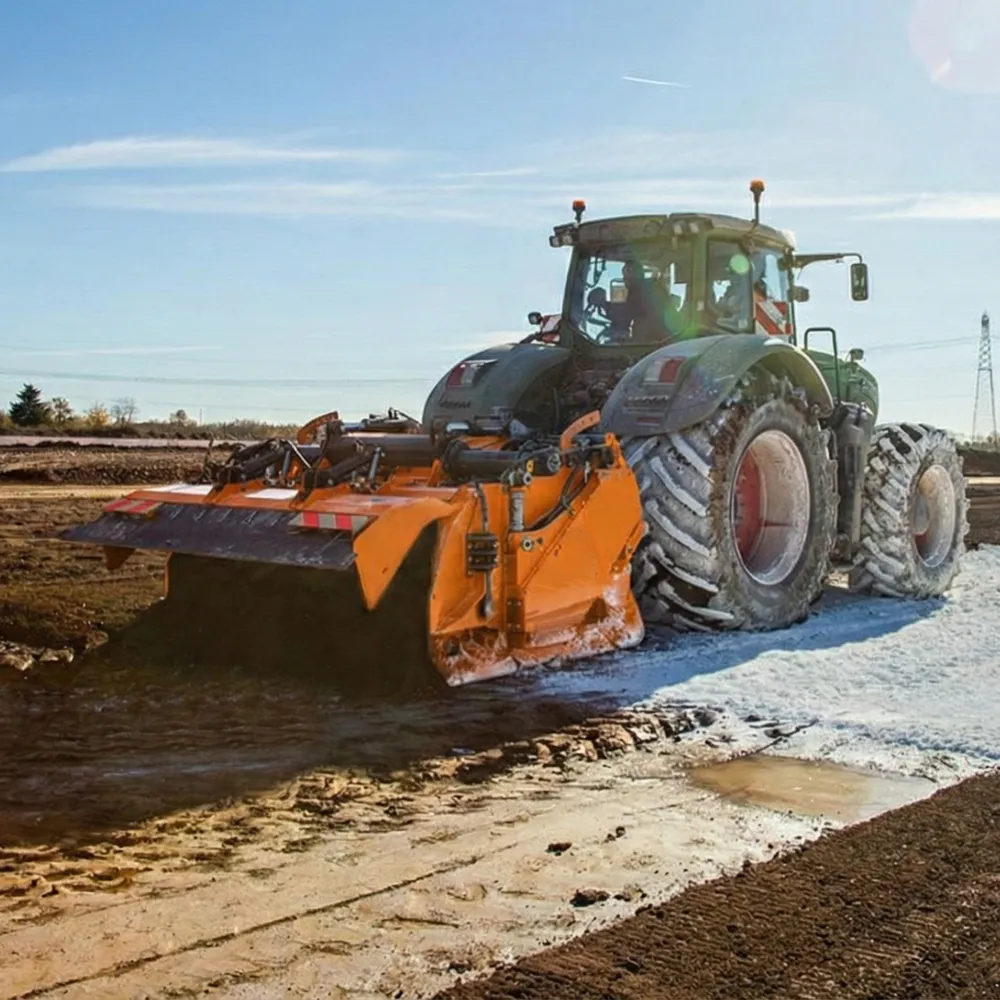
Working Principle of STABI/H Soil Stabilizer for Road Construction
The fundamental mechanics of the STABI/H tractor soil stabilizer center on its rotor assembly, which drives into the ground under the guidance of a hydraulically adjustable frame operated directly from the tractor's operator station. This setup permits flexible depth adjustments, ranging from surface-level incorporation to profound penetration reaching 56 centimeters, tailored to the specific demands of the terrain and project requirements. At its essence, the process involves integrating stabilizing agents—such as lime or cement—into the existing soil matrix to form a resilient, weight-supporting stratum essential for durable road foundations and similar infrastructure.
As the tractor advances across the site, the rotor engages at elevated rotational speeds powered by the power take-off (PTO) linkage, systematically fragmenting soil clumps and promoting thorough homogenization. The adaptable chamber geometry plays a critical role here, dynamically shifting to preserve ideal rotor-soil interaction, which guarantees uniform dispersal of additives throughout the treated layer. This responsive adaptation to fluctuating soil densities minimizes unnecessary power expenditure, as the equipment continuously calibrates to resistance levels encountered on-site, thereby enhancing fuel efficiency and operational sustainability.
Power delivery occurs via a robust arrangement of toothed belts and gear reductions, ensuring steady torque transmission without overload risks. In models designed for higher demands, integrated oil circulation systems dissipate accumulated heat, maintaining component integrity during extended periods in elevated temperatures or continuous heavy-duty cycles—conditions often prevalent in tropical or arid construction zones. This alignment with established benchmarks for soil stabilizer machinery underscores its dependability for professional applications.
Furthermore, the hydraulically managed rear enclosure incorporates mechanisms to eject surplus debris, averting blockages that could disrupt flow. Paired with adjustable support runners for precise elevation control, these elements facilitate seamless progression over irregular landscapes, from flat expanses to sloped embankments.
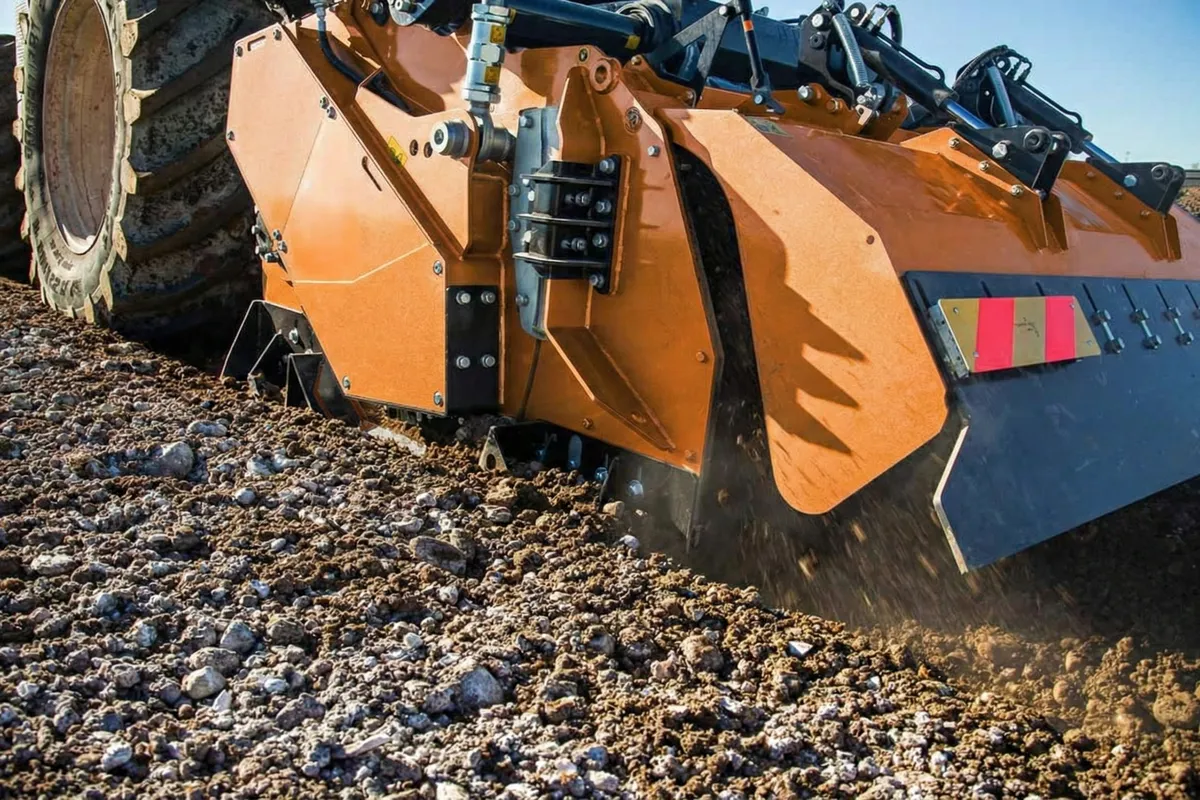
Applications of the Soil Stabilizer Machine
- Road and Highway Construction
Professionals rely on this machine to prepare robust foundations for roads and highways by blending soil with binding agents, which effectively counters erosion and accommodates substantial vehicle loads over extended periods. This process ensures long-lasting pavement integrity, reducing the frequency of repairs in high-traffic zones and supporting efficient transportation networks. - Railroad Bed Preparation
In railroad infrastructure projects, the equipment forms level and resilient beds capable of enduring constant vibrations from passing trains, incorporating stabilizers to enhance soil cohesion and prevent shifts under weight. Such applications maintain track alignment and safety, minimizing disruptions in rail operations across varied landscapes. - Parking Lots and Office Park Developments
For commercial spaces like parking areas and business campuses, it delivers uniform surfaces through deep soil mixing, resisting settlement caused by repeated use and environmental factors. This results in durable lots that handle daily parking demands without developing cracks or uneven spots, contributing to safer and more functional urban environments. - Industrial Plant Sites
At manufacturing facilities and heavy industry locations, the stabilizer reinforces ground to bear the weight of large machinery and structures, mixing in materials that boost load-bearing capacity and stability. This preparation prevents foundational failures, ensuring operational continuity and safety in settings with constant mechanical stresses. - Sports Complexes and Recreational Areas
Developers use it to craft secure, flat playing fields for stadiums, parks, and leisure venues, where even soil distribution avoids hazards like uneven turf or water pooling. By integrating binders, it creates surfaces that withstand athlete impacts and weather exposure, promoting reliable use for community events and sports activities. - Coastal and Wetland Projects
In vulnerable zones such as shorelines or marshlands, the machine provides critical support by consolidating soft soils with additives to resist water intrusion and erosion from tides or floods. This fortification enables sustainable development, like building protective barriers or access paths, while preserving ecological balance in sensitive habitats. - Airport Runway and Taxiway Foundations
For aviation infrastructure, it mixes soil layers to form sturdy bases that support aircraft weights and frequent takeoffs, incorporating elements to enhance compaction and drainage. This approach extends runway lifespan, reduces maintenance costs, and ensures smooth operations in airports handling diverse traffic volumes. - Agricultural Land Reclamation
Farmers employ the soil stabilizers to improve unstable fields by blending in compounds that increase soil firmness, allowing for better crop cultivation and machinery movement without rutting. This enhances productivity in previously marginal lands, supporting sustainable farming practices across seasons.
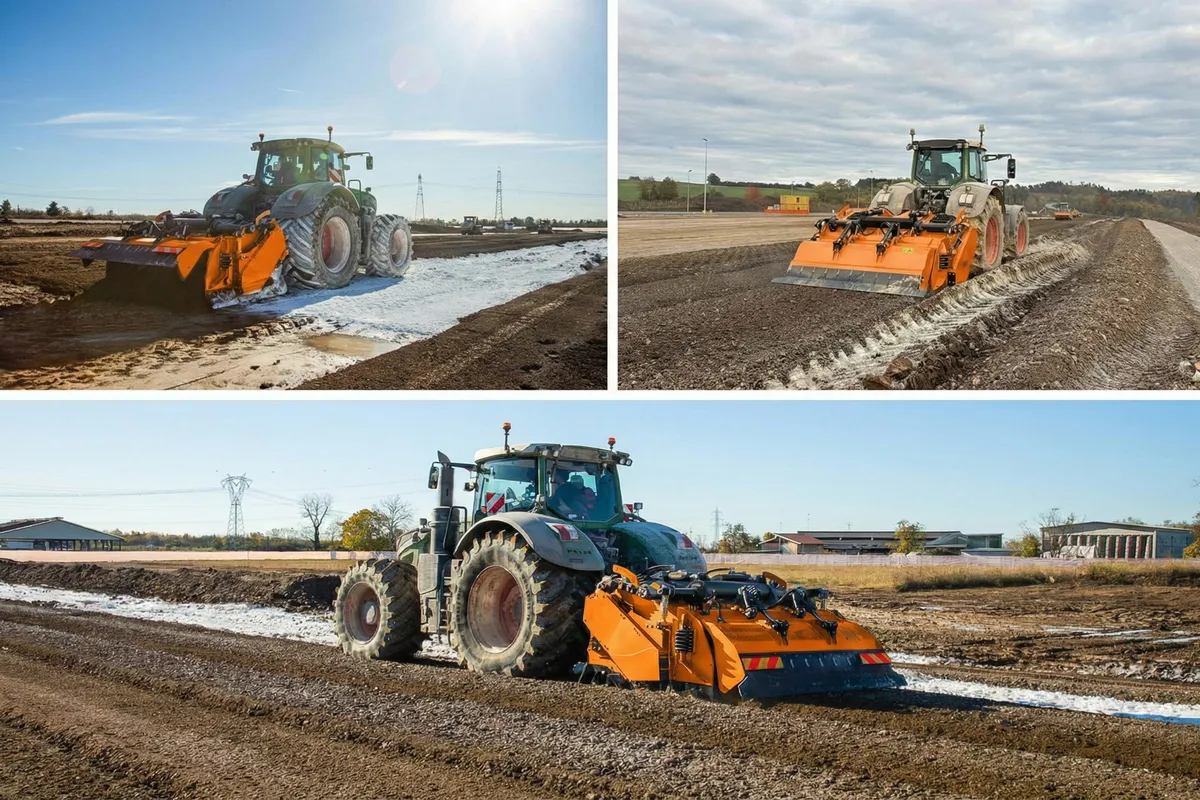
Standard Equipment
- Hydraulic rear Hood with anti-clogging system
- Interchangeable wear-resistant Hardox® plates
- Enclosed, dust-resistant machine body
- Bolt-on interchangeable protection chains
- Freewheel gearbox
- Transmission with side gearbox
- Side PTO shafts with friction clutches
- Timing belt transmission
- PTO shaft support for machine at rest
- Dozing blade
- Adjustable skids
- Interchangeable forged steel rotor shafts
- Rotor with teeth A/3
- Wear-resistant side plates
- Side gearbox cooling system
- Gearbox cooling system (STABI/H/HP)
- Central PTO shaft without cam clutch
Maintenance Tips for Tractor Soil Stabilizer Machine
- Daily Inspections of Rotor Teeth
Operators should conduct routine visual examinations of the rotor teeth to identify signs of erosion or damage, replacing them promptly after approximately 100 to 200 hours of operation based on the soil's grit level. This practice prevents inefficient mixing and potential breakdowns, ensuring the equipment maintains its effectiveness in stabilizing tasks across various project sites. - Lubrication of Bearings and Gears
Adhere to the manufacturer's recommended intervals for applying lubricant to bearings and gear components, which helps avert seizing and extends component longevity under heavy loads. Proper greasing reduces friction during rotations, supporting smooth performance and minimizing repair costs in demanding construction environments. - Post-Use Cleaning Procedures
Following every session, thoroughly rinse the rotor and rear hood to eliminate accumulated soil particles and debris, employing a high-pressure washer when accessible to reach confined areas. This step inhibits corrosion and blockages, preserving the machine's hydraulic functions and readiness for subsequent uses in road preparation or land leveling. - Monthly Belt Tension and Cooling System Checks
On a monthly basis, assess the tension in transmission belts to confirm they remain secure without slippage, while also inspecting cooling circuits for any fluid leaks or blockages. These evaluations safeguard against overheating and mechanical failures, promoting reliable operation during extended periods of soil processing in diverse climates. - Replacement of Interchangeable Plates and Chains
Monitor the condition of replaceable Hardox plates and protective chains, substituting them as wear becomes evident to shield internal mechanisms from abrasive impacts. Timely swaps maintain structural integrity, allowing the stabilizer to handle tough materials without compromising safety or output quality on infrastructure projects. - On-Site Storage of Spare Parts
Keep essential replacement items, such as teeth, plates, and seals, readily available at the worksite to facilitate immediate repairs and reduce idle time. This approach streamlines maintenance workflows, enabling quick resolutions to minor issues and sustaining productivity in time-sensitive stabilization operations.
FAQs
Q: How deep can the STABI/H soil stabilizer machine go?
A: The STABI/H soil stabilizer machine can achieve penetration depths of up to 56 centimeters, with adjustments made conveniently from the tractor's controls to suit different ground conditions. This capability allows for precise operation across a range of terrains, making it a versatile choice among soil stabilizer products for demanding stabilization tasks.
Q: What tractors are compatible with this tractor soil stabilizer machine?
A: This tractor soil stabilizer machine is designed for compatibility with tractors ranging from 300 to 500 horsepower, requiring a power take-off speed of 1000 revolutions per minute to facilitate smooth and effective power delivery. Such specifications ensure reliable integration, enhancing the overall efficiency of soil stabilizer solutions in professional settings.
Q: Is the STABI/H suitable for soil stabilizer for road construction?
A: Yes, the STABI/H proves highly effective as a soil stabilizer for road construction, where it prepares solid bases for highways and roadways by thoroughly mixing additives to create long-lasting surfaces. Its robust design supports heavy-duty applications, positioning it as a preferred option in road hard soil stabilizer scenarios for infrastructure development.
Q: What makes this the best soil stabilizer for heavy-duty tasks?
A: The STABI/H stands out as the best soil stabilizer due to its innovative variable geometry and advanced anti-clogging mechanisms, which significantly lower fuel consumption while boosting output in rigorous conditions. These attributes, combined with durable components, deliver superior performance compared to standard soil stabilizer equipment, ideal for extensive operations.
Q: How to install the soil stabilizer attachment on a tractor?
A: To install the soil stabilizer attachment, secure it using the three-point hitch system, followed by connecting the power take-off and hydraulic lines for full functionality. Calibration should then be performed to verify safe and accurate operation, ensuring the soil stabilizer tractor setup is ready for immediate use in stabilization activities.
Q: What maintenance is needed for road hard soil stabilizer equipment?
A: Maintenance for road hard soil stabilizer equipment involves consistent inspections of rotor teeth for wear, timely lubrication of moving parts, and thorough cleaning post-operation to remove debris. Adhering to these practices preserves the machine's reliability, extending its service life in challenging soil stabilizer for road construction environments.
Q: What are common applications for soil stabilizer solutions?
A: Common applications for soil stabilizer solutions include preparing foundations for highways, parking facilities, railway tracks, and industrial complexes, where enhanced ground strength is critical. This equipment excels in mixing binders to prevent erosion and support heavy loads, making it indispensable for diverse soil stabilizer products in construction.
Q: How to troubleshoot clogging in a soil stabilizer tractor?
A: To troubleshoot clogging in a soil stabilizer tractor, activate the hydraulic rear hood to dislodge accumulated materials, while implementing routine checks to avoid future occurrences. This approach maintains uninterrupted workflow, crucial for the efficiency of tractor soil stabilizer machine during intensive stabilization processes.
Q: How does this compare to other soil stabilizer equipment?
A: Compared to other soil stabilizer equipment, the STABI/H provides enhanced fuel efficiency and superior control over penetration depths, resulting in more economical and precise stabilization outcomes. Its advanced features set it apart, making it a competitive choice for professionals seeking optimal performance in soil stabilizer for tractors applications.
Kundrecensioner
Maria Gonzalez, Construction Foreman, Mexico
"We've been running this soil stabilizer for tractors on multiple road sites for about a year now, and the 2533 mm working width pairs perfectly with our 400 HP rig, cutting down fuel costs noticeably compared to what we used before. The team at Mexico Watanabe jumped in quick with a part replacement when we hit a snag, keeping everything moving without much hassle."
David Thompson, Site Manager, United States
"After putting the STABI/H soil stabilizer machine through 15 months of highway groundwork in rocky areas, it's held strong with no big problems popping up. The cab-controlled depth tweaks save us a ton of time on adjustments, and the on-time delivery helped us stick to our tight schedule without any delays."
Elena Petrov, Agricultural Engineer, Brazil
"Switching to this tractor soil stabilizer machine has made a real difference in prepping our new fields, especially with that anti-clogging setup handling the rainy season muck like a champ. Customer service was on point, getting back to us right away on customizing the tooth options for our soil types."
Ahmed Khalil, Project Lead, Egypt
"This soil stabilizer equipment has proven reliable for laying down bases at industrial spots, racking up over 500 hours without a single stop. The balance works well with our 350 HP tractors, and the logistics crew got it here faster than we figured, which was a big win for our timeline."
Sophie Laurent, Operations Supervisor, France
"The build quality of the STABI/H really stands out in rough landscapes—we've been mixing lime for parking lot jobs effectively, and the variable chamber lets us tweak things on the fly without issues. The support team's professional approach made dealing with queries straightforward and helpful."
Raj Singh, Contractor, India
"For our road hard soil stabilizer work, this one's been spot-on over the last six months, with noticeable fuel savings and the 56 cm depth managing those deeper blends no problem. They handled minor wear part replacements promptly, which kept our operations running smooth."
Liam Harper, Heavy Equipment Operator, Australia
"We've got this soil stabilizer attachment hooked up to our tractors for land rehab projects down under, and after eight months, it's tackling the dry, compacted dirt without breaking a sweat. The best soil stabilizer we've tried for efficiency, plus the quick shipping across the ocean was impressive and kept us on track."
Hans Mueller, Infrastructure Coordinator, Germany
"In our precise engineering setups, the STABI/H soil stabilizer for road construction has delivered consistent results over ten months, blending materials evenly for autobahn extensions. We appreciate the technical support's detail-oriented responses, which resolved a setup question efficiently without any downtime."
Ytterligare information
| Edited by | Yjx |
|---|