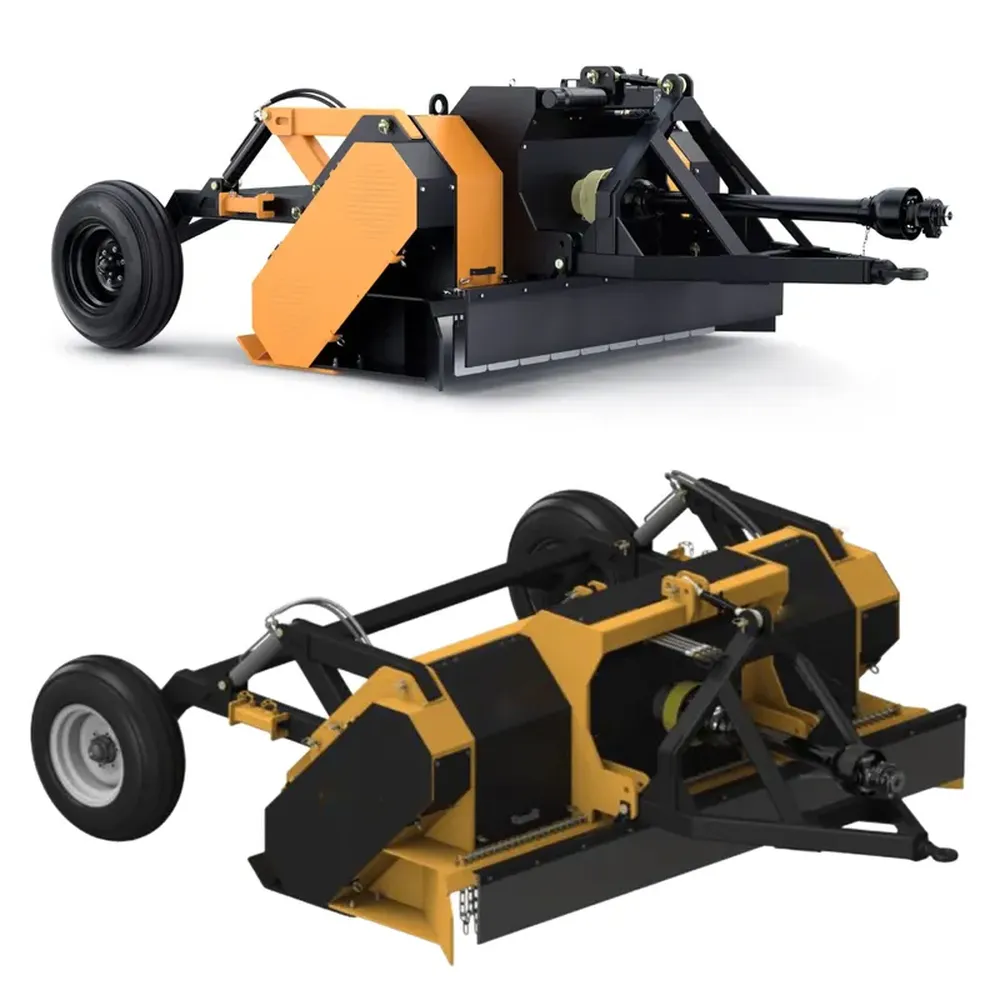
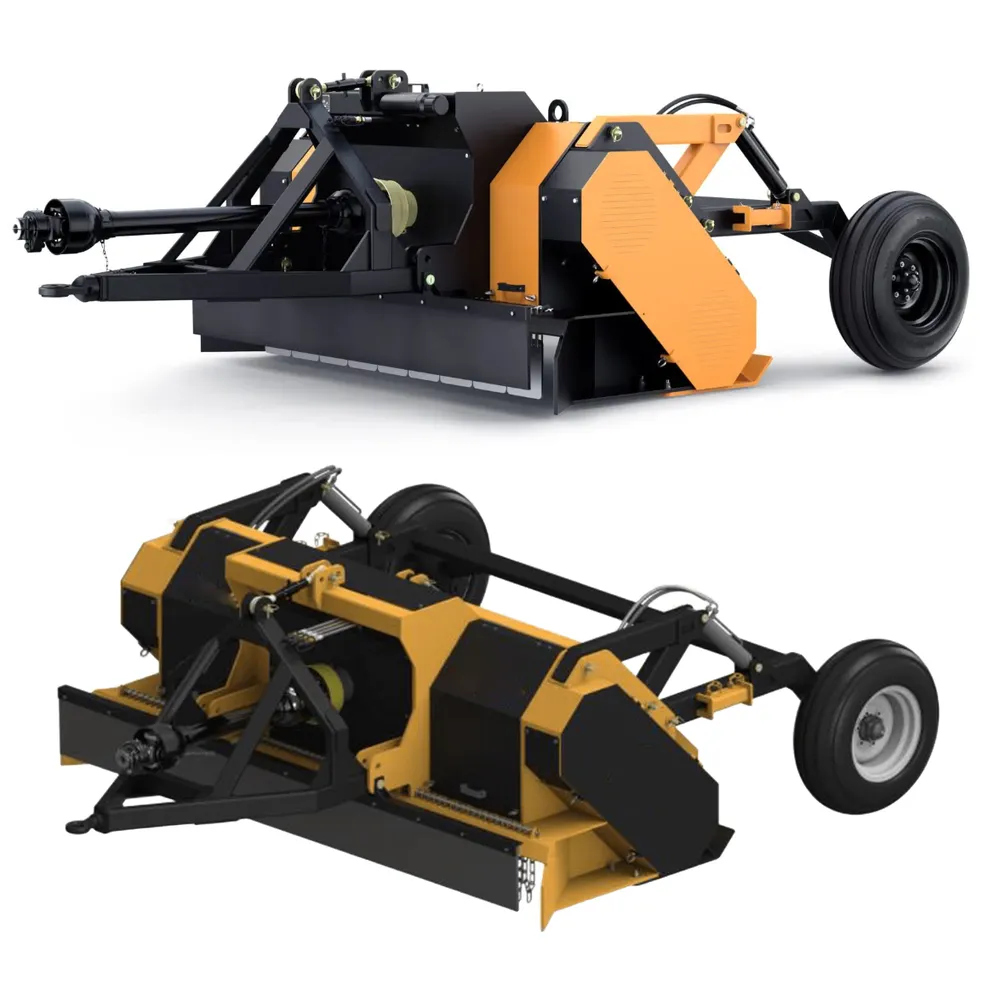
The kruszarka do kamieni ciągnikowych also known as a PTO stone crusher, rock mulcher, or stone pulverizer for tractor, is a three-point hitch implement purpose-built to grind surface and subsurface rocks directly in the field, returning crushed material to the soil in a single pass. Designed and manufactured by Watanabe in Mexico, our stone crusher range serves a broad spectrum of industries where rocky terrain limits land productivity. In arable crop farming, embedded limestone, basalt, and caliche hardpan are a constant obstacle to plowing, seeding, and harvesting our crushers eliminate these in one pass without removing material. In viticulture and horticulture, inter-row and orchard-floor models protect root zones while keeping aisles stone-free.
In pasture management, post-frost rock emergence is handled quickly before mowing equipment is damaged. For land reclamation contractors, the crusher transforms previously unusable rocky plots into commercially viable farmland, dramatically increasing asset value. In road and infrastructure maintenance, the crusher resurfaces farm tracks and rural roads using on-site aggregate at zero import cost. In forestry, trail-clearing and reforestation site preparation are handled without hauling debris. Whether you manage 5 hectares or 5,000, Mexico Watanabe stone crushers provide an industrially rated solution directly compatible with your existing tractor fleet, eliminating the need for dedicated rock removal machinery and crews. Our models cover tractor horsepower from 60 HP compact units up to 400 HP heavy-duty machines, covering every scale of operation across Mexico, Latin America, and international markets.
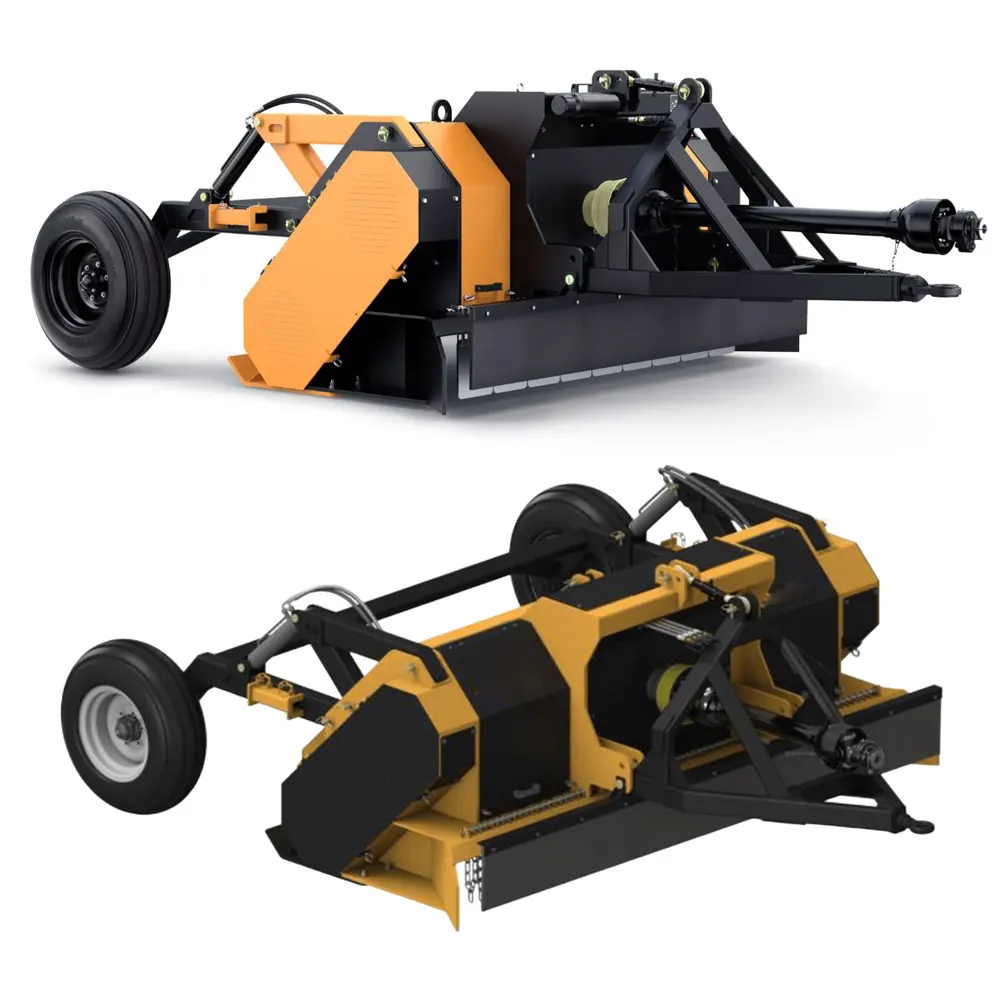
Core Advantages:
- Single-pass rock elimination with zero disposal cost: Rocks are crushed and redistributed back into the soil profile on the same pass, saving the significant time, fuel, and labour expense associated with mechanical rock picking, hauling, and off-site disposal. This alone can reduce land preparation costs by 40% to 60% compared to traditional methods.
- Full HP range from 60 to 400 HP covered by one supplier: Mexico Watanabe manufactures compact, standard, heavy-duty, and XHD model series, allowing a single procurement relationship to cover every machine in your fleet regardless of tractor brand or horsepower class.
- Factory-direct pricing with Mexico-based aftermarket support: As a Mexico-based manufacturer supplying Latin America directly, Mexico Watanabe eliminates import distributor markups and maintains an in-country spare parts warehouse for same-week dispatch of teeth, shear bars, and gearbox components.
Technical Specifications
The following table covers our three primary stone crusher models. All specifications are based on factory-verified data. Contact us for custom configurations.
| Parameter | THOR 2.4 | THOR 3.0 | THOR FLM |
|---|---|---|---|
| Szerokość robocza | 2.4 m | 3.0 m | 1,68 m |
| Min. Engine Power | 180 CV | 230 KM | 230 KM |
| Prędkość WOM | 1000 obr./min | 1000 obr./min | 1000 obr./min |
| Working Speed | 3 km/h | 3 km/h | 0.6 – 2.5 km/h |
| Machine Weight | 2300 kg | 2800 kg | 2300 kg |
| Długość (mm) | 1546 | 1732 | 1732 |
| Szerokość (mm) | 2481 | 3000 | 2480 |
| Wysokość (mm) | 1212 | 1212 | 1212 |
| Linkage Category | Cat. 2 | Cat. 2 | Cat. 2 |
| Control Valves Required | 2 | 2 | 2 |
| Max Stone Diameter | 30 cm | 30 cm | 30 cm |
Working Principle and Structural Composition
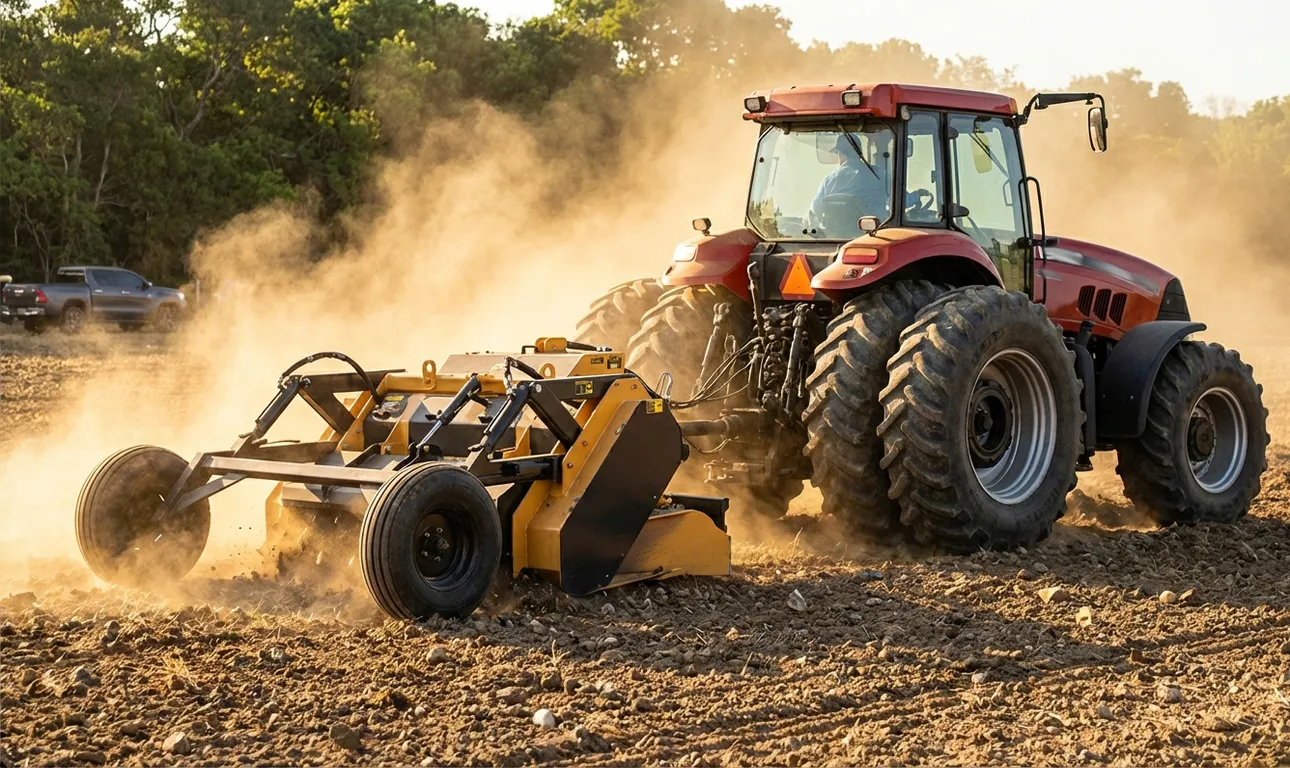
The Mexico Watanabe tractor stone crusher operates through a precisely engineered sequence of mechanical steps that convert the tractor’s rotational PTO power into controlled crushing force. Understanding this principle helps operators get the best output and avoid common operational errors.
Step 1 — PTO Power Transfer: The tractor’s power take-off shaft, rotating at 1000 RPM, couples directly to the crusher’s input gearbox via a driveline shaft equipped with a cam clutch or shear bolt overload protection device. The sealed, oil-bath gearbox steps up the rotational speed to drive the main rotor shaft at the correct operational RPM. The gearbox is rated at a minimum of 130% of the maximum expected PTO input torque, providing a safety margin for impact peaks when the rotor strikes large stones.
Step 2 — Rotor Action: The main rotor — a dynamically balanced, precision-machined alloy steel drum — carries rows of tungsten carbide-tipped fixed teeth or free-swing hammers depending on the model configuration. As the tractor advances at 3 km/h (or 0.6 to 2.5 km/h for the THOR FLM precision model), the spinning rotor — turning at over 1000 RPM — contacts embedded rocks and surface debris. The kinetic energy delivered by each tooth strike is sufficient to fracture stones up to 30 cm in diameter. The rotor’s high rotational inertia ensures that encountering a hard stone does not cause the system to stall; instead, inertia sustains the strike force through the fracture point.
Step 3 — Crushing Chamber Dynamics: The rotor operates inside a reinforced steel crushing chamber lined with Hardox wear-resistant plate. After the initial rotor strike, fractured stone fragments are redirected by the chamber geometry toward the adjustable counter-blade (shear bar) positioned at the rear of the rotor arc. This secondary impact point reduces fragments further. The gap between the rotor tip and the counter-blade determines the final particle size — a narrower gap produces finer gravel while a wider gap allows coarser output. Operators control this gap from the tractor cab via the hydraulic system, requiring no manual intervention.
Step 4 — Depth Control: Adjustable side skids mounted to the machine frame ride along the soil surface and control the working depth of the rotor into the ground. The tractor’s three-point hitch hydraulics allow the operator to set and maintain a precise working depth from the cab. The THOR models are designed for working depths of up to 30 to 40 cm depending on configuration, covering the full root zone of most annual crops and the compaction layers of typical caliche and hardpan soils found across Mexico and Latin America.
Step 5 — Material Return: After crushing, the fine gravel and rock particles mixed with the upper soil layer are ejected downward and rearward by the rotor action, redistributing evenly across the worked strip. This crushed material improves soil drainage, increases the proportion of mineral particles in the topsoil, and creates a more uniform seedbed. Because all material stays in the field, there is zero disposal cost and the minerals in the crushed rock contribute to long-term soil fertility.
Core Advantages of Mexico Watanabe Stone Crushers
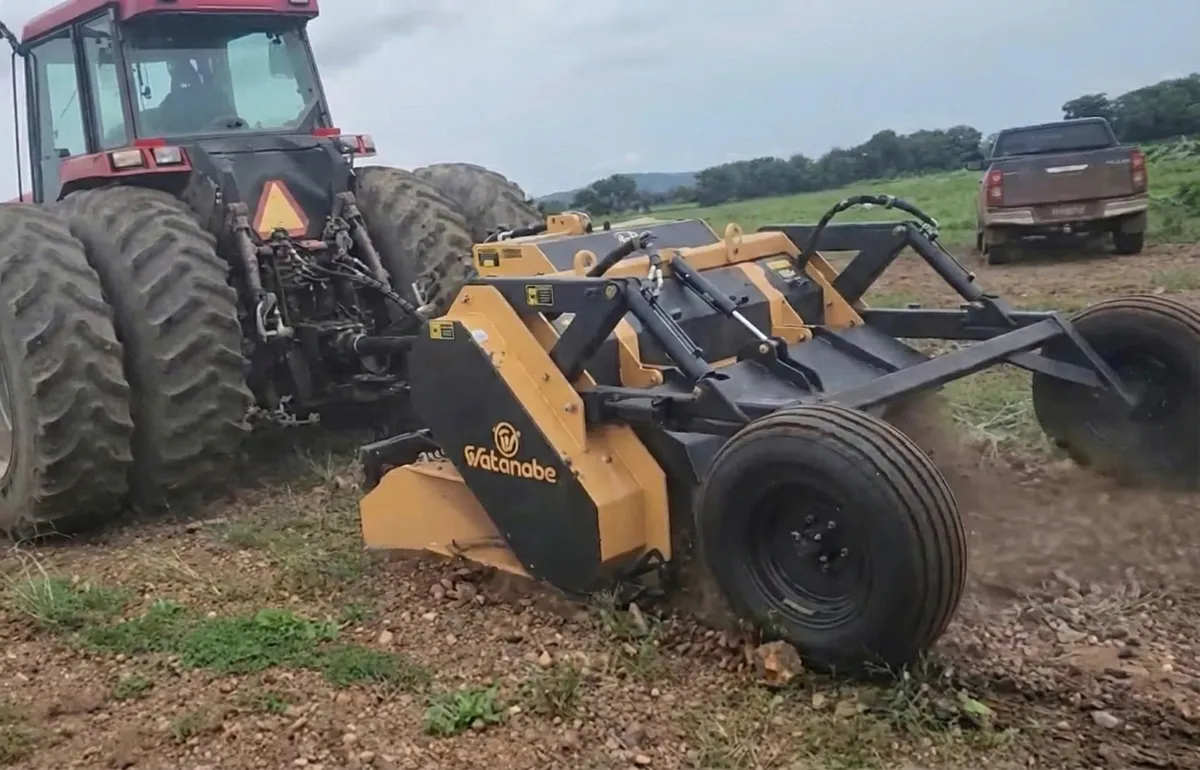
Single-Pass Efficiency with Dual-Function Processing
The Mexico Watanabe stone crusher simultaneously crushes rocks and processes vegetation in a single tractor pass, eliminating the need for sequential operations with separate implements. This dual-function capability reduces the total number of field passes required before planting, saving an estimated 30% to 50% in fuel and operator time compared to running a rock picker followed by a rotary tiller. Operators working against tight seasonal windows — particularly in spring planting preparations — see immediate benefit from this consolidated workflow.
Tungsten Carbide Teeth for Maximum Wear Life
All stone crusher models are equipped with Grade YG8 tungsten carbide-tipped cutting teeth, induction-brazed to high-alloy steel bodies at 850 degrees C for a bond strength exceeding 600 N/mm2. This tooth specification provides 3 to 5 times the service life of standard hardened steel teeth in typical agricultural stone crushing applications. Each tooth is individually replaceable in the field using standard tools — no rotor removal required — minimizing downtime during the peak operating season and reducing the cost per hectare of land prepared over the machine’s lifetime.
Hydraulic Depth Control from the Tractor Cab
Stone crushers feature full hydraulic working depth control, allowing the operator to adjust penetration depth from 0 to the maximum rated depth without leaving the tractor cab. This is a critical operational advantage when working in fields with variable stone density — deep sections with heavy rock concentrations can be processed at maximum depth while shallower zones are handled with lighter passes to preserve topsoil structure. The hydraulic counter-blade gap adjustment also allows real-time particle size control, adapting the output from fine gravel to coarser material based on the intended use of the prepared soil.
Soil Quality Improvement as a By-Product
Unlike rock pickers that simply remove stones from the field, stone crushers return crushed mineral material to the soil profile. Fine rock particles — particularly from limestone, basalt, and calcium-carbonate caliche — release minerals including calcium, magnesium, potassium, and trace elements directly into the root zone over time. The crushed particles also improve soil drainage by breaking up compacted clay layers and allowing better water infiltration. Farmers in caliche-affected regions of northern Mexico have reported measurable improvements in available water capacity after systematic stone crusher operations over two to three seasons.
Overload Protection Preserving Tractor and Machine Drivetrains
Every stone crusher is fitted with a driveline overload protection device — either a cam clutch (automatic reset) or a shear bolt system — positioned between the tractor PTO shaft and the crusher gearbox input. When the rotor encounters a rock or buried obstruction that exceeds the system’s rated torque, the protection device disengages the drive within milliseconds, preventing destructive shock loads from reaching the tractor’s transmission, PTO shaft, and the crusher gearbox. The cam clutch variant resets automatically when the obstruction clears, allowing work to resume immediately without stopping to replace a shear bolt.
Mexico-Based Support with In-Country Spare Parts Stock
As a Mexico-headquartered manufacturer, maintains a dedicated spare parts warehouse serving customers throughout Mexico and Latin America. Critical wear components — including replacement teeth sets, shear bars, PTO shaft components, gearbox seals, and side skid wear pads — are held in stock for same-week dispatch. This is a significant operational advantage compared to purchasing European-origin stone crushers where spare parts often require 4 to 12 weeks for international shipping, and where technical support is limited to email correspondence in foreign time zones. Mexico Watanabe engineers are reachable by phone and WhatsApp in Spanish during business hours.
Structure and Material Quality
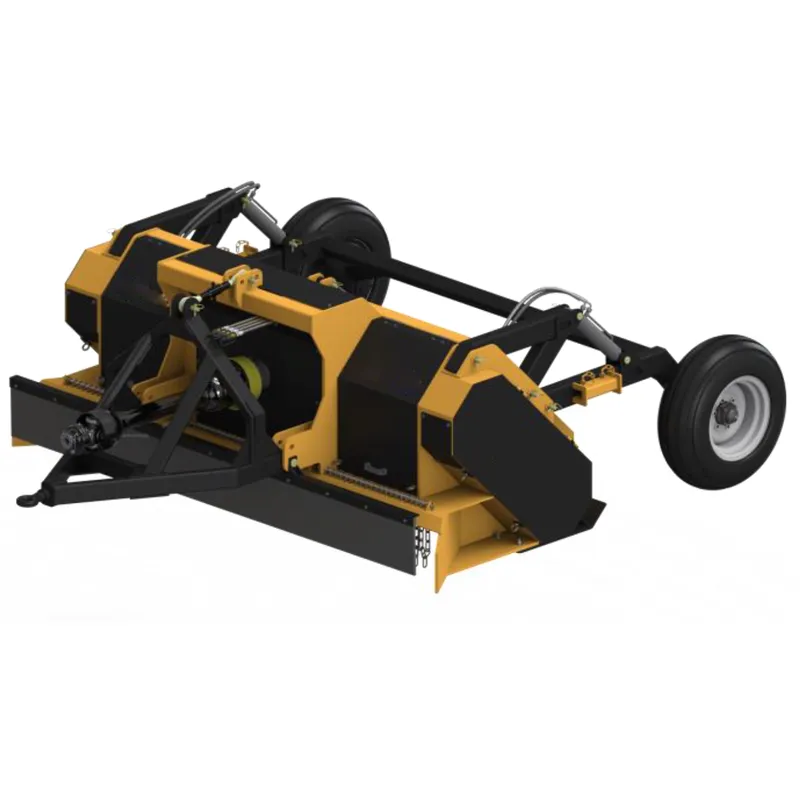
The durability of a tractor stone crusher is determined almost entirely by the quality of its materials and construction precision. Mexico Watanabe applies industrial-grade material specifications to every component in the crushing system, ensuring that each machine delivers a long, low-maintenance service life even in the most demanding field conditions.
Main Frame: The primary structural chassis is fabricated from S355J2 high-tensile structural steel plate with a minimum thickness of 12 mm in primary load-bearing sections. All joints are fully MIG-welded using qualified procedures. The completed frame assembly is shot-blasted to SA2.5 surface preparation standard and finished with a two-coat epoxy paint system for corrosion protection in high-humidity and chemically aggressive agricultural environments. Frame geometry is designed with reinforced gussets at all stress concentration points — particularly at the three-point hitch attachment lugs, which experience severe cyclical loading during field operation.
Rotor System: The central rotor shaft is machined from 42CrMo4 chrome-molybdenum alloy steel, providing a combination of high tensile strength (minimum 1000 MPa) and toughness to resist crack propagation under repeated impact loading. The shaft is CNC-machined to close tolerances and dynamically balanced to ISO 1940 G6.3 standard to minimize bearing loads and extend bearing life. Rotor bearings are sealed, grease-lubricated units rated for the full operational load spectrum including peak shock loads from stone strikes. Bearing housings incorporate labyrinth seals to exclude dust, moisture, and stone particles.
Crushing Teeth: Standard configuration uses YG8 grade tungsten carbide tips brazed to 40CrMnTi alloy steel tooth bodies using a specialized induction-brazing process at 850 degrees C. The resulting brazed joint achieves a shear strength exceeding 600 N/mm2, significantly higher than the force required to break through stones at operational rotor speeds. Each tooth is mounted in a bolt-on holder welded to the rotor drum, allowing individual tooth replacement without rotor disassembly. Tooth holders are made from cast and heat-treated alloy steel and are themselves replaceable when worn beyond tolerance.
Crushing Chamber: The interior of the crushing chamber — walls, floor, and ceiling surfaces exposed to rock fragment impact — is lined with 10 to 12 mm Hardox 400 wear-resistant steel plate. Hardox 400 has a nominal Brinell hardness of 400 HB, providing approximately 3 to 4 times the wear resistance of standard structural steel under abrasive stone impact conditions. Chamber lining panels are designed as bolt-on replaceable sections, allowing targeted replacement of the highest-wear zones without full chamber reconstruction.
Gearbox and Transmission: The oil-bath lubricated gearbox uses helical or bevel-helical gear sets for smooth, efficient power transmission from the PTO shaft to the rotor. Oil volume is sized for splash lubrication across the full operating temperature range from minus 10 to plus 60 degrees C. The gearbox housing is cast from high-strength ductile iron and machined to precise tolerances at input and output shaft interfaces. Gearbox rating is minimum 130% of the maximum expected PTO input torque, providing a service safety margin for the high-inertia shock loads characteristic of stone crushing applications. A thermal relief valve is incorporated to protect the gearbox in extended high-load conditions.
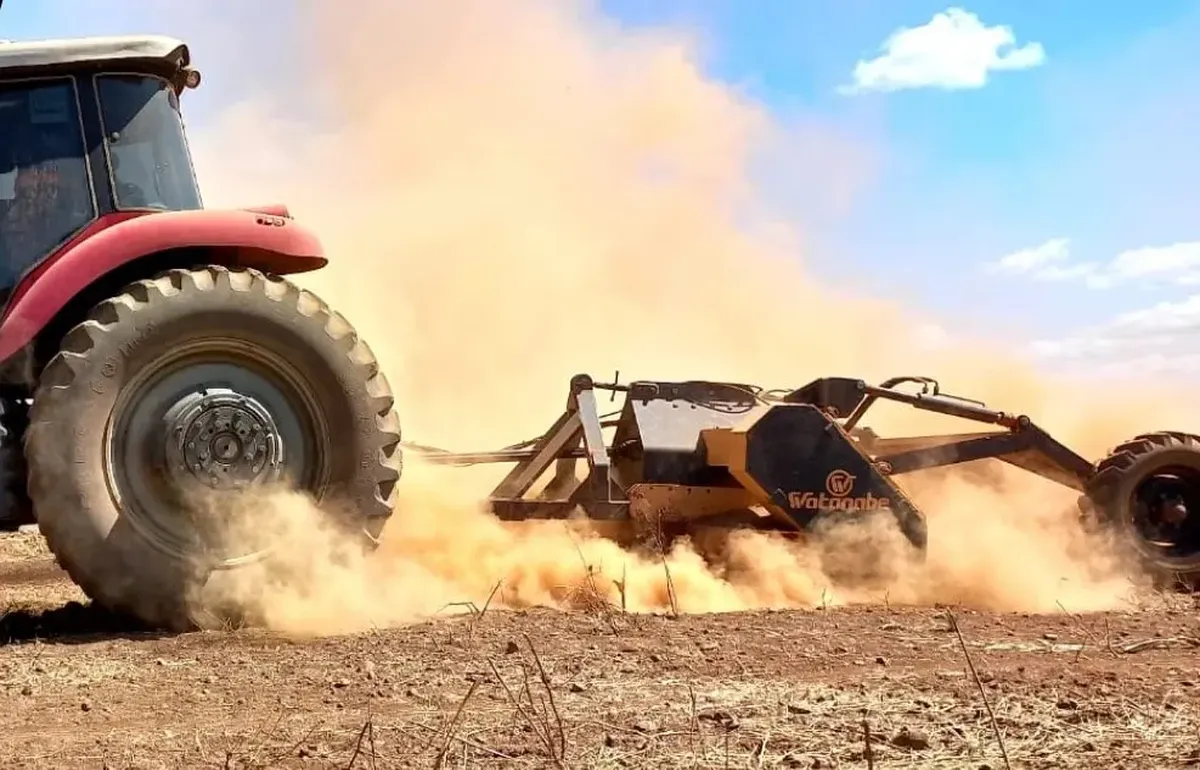
Typical Application Scenarios
1. Arable Crop Land Preparation (Corn, Wheat, Sorghum, Beans)
Rocky arable fields present a recurring cycle of equipment damage — disc blades, plow shares, and seed drill tines are all vulnerable to stone strikes. The Mexico Watanabe stone crusher eliminates the source of this damage by grinding surface and subsurface rocks into fine particles before any tillage equipment enters the field. This protects downstream equipment investment, reduces downtime during the critical planting window, and leaves a more uniform seedbed for accurate seed placement and even germination. Farmers in the Bajio region of Guanajuato and the volcanic highland zones of Puebla and Tlaxcala routinely deploy stone crushers before the spring planting season to prepare newly cleared or fallow fields for mechanized row-crop production.
2. Vineyard and Orchard Establishment and Maintenance
Vineyards and orchards present a unique stone management challenge: inter-row machinery including mowers, flail mulchers, and under-vine cultivators are operated repeatedly throughout the growing season and are highly vulnerable to stone damage. Inter-row stone crusher models with body widths matched to the vineyard row spacing eliminate inter-row stones without approaching the vine trunk zone. In newly established blocks, the stone crusher prepares planting rows to the required depth without the root disturbance associated with plowing-based stone removal. Wine-grape producers in Baja California’s Valle de Guadalupe and fruit orchards in Sonora and Chihuahua state use stone crushers as a standard part of new block establishment and annual maintenance workflows.
3. Caliche and Hardpan Reclamation in Arid Zones
Caliche — a calcium carbonate hardpan layer — is one of the most common and economically damaging soil constraints across northern Mexico, the Yucatan Peninsula, and large areas of Central America and the Andean highlands. Where caliche layers are within 15 to 40 cm of the surface, standard subsoiling or ripping often fails to break the layer thoroughly, and the results deteriorate within one to two seasons as the layer reforms. The stone crusher’s high-speed rotor action physically pulverizes the caliche into fine calcium carbonate particles that are redistributed throughout the soil profile, permanently breaking the layer and improving both water infiltration and root penetration depth. This reclamation approach is more thorough than subsoiling and does not produce the “shatter smear” compaction zones associated with ripping in moist conditions.
4. Pasture Renovation and Rock Emergence Management
In pasture systems, rocks that have worked to the surface through the freeze-thaw cycle or through cattle trampling present a recurring hazard to mowing equipment. A single rock strike can destroy a mower blade assembly and cause significant downtime at the height of the haymaking season. The stone crusher eliminates surface and near-surface stones across the entire pasture area in a single operation, creating a safe mowing zone that remains usable for multiple seasons before re-treatment is required. Ranchers across the highland livestock zones of Jalisco, Michoacan, and the Sierra Madre Occidental use stone crushers as part of regular pasture renovation programs alongside aeration and overseeding.
5. Rural Road and Farm Track Maintenance
Unpaved farm roads degrade quickly under the combined effect of heavy equipment traffic and seasonal weather. Surface rocks and potholes form rapidly, creating hazards for vehicles and causing damage to loaded transport trucks during harvest. The stone crusher processes existing surface rock along the road corridor, grinding loose and protruding stones into fine aggregate that compacts into a stable wearing surface. The result is a serviceable road surface created at zero aggregate import cost, using material already present on-site. The process also allows operators to reshape the road camber for improved drainage by adjusting working depth across the road cross-section.
6. Construction Site Ground Preparation and Land Development
On rural construction and development sites, the stone crusher eliminates the need to import crushed aggregate for subbase preparation in areas where surface rock is present. By processing existing rock in place, it creates a compactable granular subbase for building pads, access roads, and hardstanding areas. Developers and contractors working in rocky highland zones find this approach significantly reduces earthworks costs compared to the alternative of importing aggregate by truck over poor road networks. The stone crusher also eliminates the environmental and logistical complications of off-site rock disposal, which is increasingly subject to regulatory oversight in Mexico and other Latin American jurisdictions.
Selection Guide: How to Choose the Right Stone Crusher
Selecting the correct stone crusher model for your operation requires a careful assessment of your tractor’s capability, your land’s rock characteristics, and your intended application. The following guide covers every critical parameter that should be confirmed before placing an order.
1. Tractor PTO Horsepower: The most fundamental specification is matching the stone crusher’s minimum HP requirement to your tractor’s available PTO horsepower — not engine horsepower. PTO horsepower is typically 85% to 92% of engine horsepower in modern tractors. Operating a stone crusher at PTO power below its rated minimum results in constant rotor stalling, overheating of the gearbox, and dramatically accelerated wear on all drive components. For the THOR 2.4, your tractor must deliver a minimum of 180 cv at the PTO. For the THOR 3.0 and THOR FLM, the minimum is 230 cv. We recommend operating at 10% to 20% above the minimum to provide a power reserve for peak load conditions.
2. Maximum Rock Size on Your Land: Walk your fields and identify the largest individual rocks that will need to be processed. Measure the diameter of representative large specimens. All three THOR models are rated for stones up to 30 cm in diameter. If you regularly encounter rocks exceeding this size, contact our engineering team to discuss XHD configurations capable of handling stones up to 50 cm diameter.
3. Rock Depth — How Deep Do Stones Extend? Excavate test pits at least 45 cm deep at multiple representative locations across your field. Note the depth at which stones cease to appear. This determines the required working depth of the rotor. If stones are concentrated in the top 20 cm, the THOR 2.4 standard configuration is appropriate. If stones extend to 30 to 35 cm — common in virgin land, caliche zones, and some highland basalt areas — specify the maximum-depth configuration. Stone crushers are not effective for processing rock below their maximum working depth.
4. Working Width — Field Size vs. Row Spacing: For open field applications, choose the widest working width compatible with your tractor’s HP and transport width restrictions. The THOR 3.0 at 3.0 m working width reduces the number of passes required on a given area by 25% compared to the THOR 2.4. For vineyard and orchard applications, the working width must be narrower than the row spacing — typically by at least 40 cm — to provide clearance for vine trunks and tree bases. The THOR FLM at 1.68 m working width is specifically suited to orchard and vineyard inter-row applications.
5. Rock Hardness and Geology: The rock type on your land influences both the rotor tooth specification and the expected tooth wear rate. Soft limestone and sandstone are processed efficiently with standard carbide-tip teeth. Hard igneous rocks — basalt, granite, volcanic andesite — are common across Mexico’s volcanic highlands and require the maximum-grade carbide tooth specification. Provide information on the rock type when placing your order so our engineers can recommend the correct tooth grade and ensure appropriate gearbox rating for the rock hardness class.
6. Hitch Category and Tractor Hydraulic Capacity: All THOR models use Category 2 three-point hitch. verify that your tractor has a Cat. 2 lower link system and that the hydraulic remote valve system can supply the 2 control valves required by the stone crusher’s depth adjustment and counter-blade hydraulic circuits. If your tractor has a Category 3 hitch (common on higher-HP machines), Cat. 2 reduction bushings are available and should be specified at time of order.
7. Application Environment: For dusty conditions — desert agriculture, road making in arid zones — specify additional bearing sealing and gearbox breather protection. For high-altitude operations above 2500 m (common in the Andes and Mexican Sierra Madre) where air density is reduced, tractor engine output is derated and the minimum tractor HP specification should be increased by approximately 15% per 1000 m of altitude above sea level. Contact Mexico Watanabe engineers for altitude-specific recommendations.
Mexico Watanabe vs. Leading Stone Crusher Brands — Model Reference Table
Important Notice: The brand names, model designations, and specifications listed in the table below are provided exclusively as a reference aid for customers familiar with those products. Mexico Watanabe manufactures its own original stone crushers and does not produce, sell, or claim any affiliation with the brands listed. No trademark infringement, counterfeiting, or intellectual property violation is intended or implied. This comparison is provided in good faith to assist customers in the selection process.
| Competitor Model | Brand | HP Range | Szerokość robocza | Mexico Watanabe Match | Price Advantage |
|---|---|---|---|---|---|
| THOR 2.4 (Watanabe) | Watanabe (Japan/Mexico) | 180 HP+ | 2.4 m | THOR 2.4 Series | Comparable / Better support |
| THOR 3.0 (Watanabe) | Watanabe (Japan/Mexico) | 230 HP+ | 3.0 m | THOR 3.0 Series | Comparable / Direct factory |
| RSL 150 | FAE (Italy) | 80-190 HP | 1.4-2.0 m | Standard Series | 20-35% lower |
| STCH 280 | FAE (Italy) | 280-400 HP | 2.1-2.6 m | XHD Series | 25-40% lower |
| L 1500 | Valentini (Italy) | 130-190 HP | 1.5 m | Standard Series | 20-30% lower |
| RA 1500 | Valentini (Italy) | 130-200 HP | 1.5 m | Standard / HD Series | 20-30% lower |
| BPS 200 | Kirpy (France) | 80-150 HP | 2.0 m | Standard Series | 15-25% lower |
| RSM/HP | FAE (Italy) | 200-360 HP | 2.3 m | HD / XHD Series | 30-40% lower |
Quality Certifications and Service Commitment
ISO 9001:2015
Full manufacturing quality management system certification covering design, production, inspection, and delivery
CE Certification
European combined machinery directive compliance, covering safety, noise, and vibration standards for PTO-driven agricultural implements
2-Year Structural Warranty
Full coverage on frame, rotor shaft, and gearbox housing against manufacturing defects; 1-year coverage on wear components
In-Country Parts Stock
Full consumables inventory held in Mexico warehouse — same-week dispatch of teeth, shear bars, gearbox seals, and PTO components
Spanish-Language Engineering Support
Phone, WhatsApp, and email technical support from qualified agricultural engineers during Mexico City business hours
Commissioning Documentation
Full installation manual, maintenance schedule, and parts catalog supplied in Spanish and English with every machine
Engineer Field Notes: Verified Customer Projects
🇨🇪 Mexico — Guanajuato State, Bajio Region
Garlic and Onion Field Preparation on Caliche Terrain
“We farm 220 hectares in the Bajio with a persistent caliche layer at 20 to 25 cm depth that was limiting onion root development and irrigation efficiency. After two THOR 2.4 passes in the spring, the caliche broke up completely. Root depth in the following onion crop reached 35 cm compared to an average of 18 cm in previous seasons. The machine processed stones up to 25 cm across without stalling once on our 190 HP AGCO tractor. The local support team delivered replacement teeth within two days when we needed them — that kind of response is something no European brand can match from here.”
— Commercial vegetable cooperative, Irapuato district
🇧🇷 Brazil — Rio Grande do Sul, Southern Highlands
Soybean Land Reclamation on Basalt Rock Terrain
“We reclaimed 150 hectares of basalt-dominated highland ground for soybean production using the THOR 3.0 on a 250 HP Valtra tractor. Working depth was set to 30 cm throughout. The machine handled basalt stones up to 28 cm in diameter consistently over a five-week campaign without gearbox problems. Our cost per hectare for the reclamation was approximately 35% lower than the FAE quotation we received for the same scope of work. The Mexico Watanabe team provided Spanish-language technical support throughout the project and responded to all queries within the same business day.”
— Grain producer, Caxias do Sul region
🇦🇷 Argentina — Mendoza Province
Vineyard New Block Establishment on River Gravel Soil
“Establishing new Malbec blocks on our piedmont plots requires crushing through river gravel and occasional quartzite cobbles to achieve proper soil structure for drip irrigation and vine rooting. We used the THOR FLM model with 1.68 m working width matched to our 1.8 m row spacing. The machine cleared each new row strip to 25 cm depth cleanly and the fine output mixed well with our loamy base soil. After two full growing seasons, vine establishment rates on the prepared blocks are running at 98% — significantly higher than our historical average on unprepared stony ground.”
— Winery estate manager, Lujan de Cuyo appellation
🇮🇹 Italy — Tuscany, Maremma Region
Olive Orchard Floor Management on Limestone Rock
“Our maremma olive groves sit on shallow limestone soil where rock emergence is seasonal and constant. We trialled the Mexico Watanabe standard-series stone crusher alongside a European competitor over a full season and found comparable output quality at a price that was 28% lower and with spare parts available in two business days rather than three weeks from Germany. The gearbox has run without any seal or lubrication issue through 600 hours, which was not the case with a previous French machine we used. We have now ordered a second unit for a different block.”
— Olive oil producer and estate manager, Grosseto province
🇦🇺 Australia — Western Australia, Wheatbelt
Large-Scale Wheat Field Stone Management
“We run a 3,800-hectare dryland wheat operation in the WA Wheatbelt where granite outcrop and scattered quartz stones are a persistent harvesting hazard. We contracted the XHD configuration on a 380 HP Case quadtrac and cleared 600 hectares in one season at 40 cm working depth. Stone strike incidents with the header in the following harvest season dropped by approximately 80% on treated sections. Delivered cost was significantly below comparable machines available from Italian or French distributors in Australia, and the machine shipped within seven weeks of order.”
— Broadacre grain producer, Northam district
🇸🇦 South Africa — Limpopo Province
Citrus Orchard Expansion on Laterite Rock
“Expanding our citrus operation into a rocky laterite hillside block required processing surface and subsurface stones to 30 cm before irrigation infrastructure could be installed. The THOR 2.4 on a 200 HP John Deere 7R handled the laterite material cleanly over eight weeks of continuous work. We had one worn tooth set replaced at the 400-hour mark — the teeth were ordered from the Mexico Watanabe warehouse and arrived in four working days. The operation would have cost at least 40% more using a European brand and waiting for imported spare parts.”
— Citrus estate foreman, Limpopo Valley
🇨🇴 Colombia — Boyaca Department, Andean Highlands
Potato and Flower Farm Expansion on Shale Rock
“Our highland cooperative farms potatoes and cut flowers at 2,800 meters elevation in Boyaca. The shale fragments in our fields were causing repeated damage to planting equipment and limiting tuber development. We purchased a standard series stone crusher and ran it on a 160 HP tractor, applying the 15% altitude HP derate as recommended by the Mexico Watanabe engineering team. The machine cleared 80 hectares over the dry season and we saw a 22% improvement in potato marketable yield on treated blocks in the following crop. Pricing was approximately 30% below the European alternative we priced.”
— Agricultural cooperative, Duitama district
🇩🇿 Germany — Baden-Wurttemberg
Vineyard Renovation After Flood Damage
“Flooding deposited significant gravel and cobble material across 35 hectares of our lower vineyard blocks, making mechanical cultivation impossible in the following season. We used the Mexico Watanabe THOR FLM to process the deposited material in-row and inter-row across all affected blocks over three weeks. The fine gravel output actually improved drainage in blocks that had historically suffered from compaction. We would not have expected such clean performance from a non-European supplier, but the build quality and the technical documentation provided were comparable to Italian machines we have operated previously, at a meaningfully lower price point.”
— Wine estate production manager, Kaiserstuhl wine region
Frequently Asked Questions (FAQ)
Q1: What is the minimum tractor horsepower required to run an stone crusher?
The minimum PTO horsepower requirement varies by model. The THOR 2.4 requires 180 cv at the PTO, while the THOR 3.0 and THOR FLM require 230 cv. It is critical to match PTO horsepower — not engine horsepower — to the crusher specification. PTO HP is typically 85% to 92% of rated engine HP. Operating below the minimum PTO HP causes rotor stalling, gearbox overheating, and accelerated wear on all drivetrain components. We recommend operating at 10% to 20% above the rated minimum for a safety margin during peak stone load conditions. For operations at altitudes above 2000 m, the effective engine output is reduced and a higher engine HP tractor should be selected accordingly.
Q2: What is the largest stone size that stone crushers can process?
All three THOR series models — the THOR 2.4, THOR 3.0, and THOR FLM — are rated for stones up to 30 cm in diameter as standard. This covers the vast majority of agricultural stone crushing applications, including limestone, basalt, granite, caliche, and river gravel deposits. For applications involving larger stones — such as primary land reclamation in volcanic basalt terrain with rocks exceeding 30 cm offers XHD configurations capable of processing stones up to 50 cm in diameter. Customers should assess the maximum stone size on their land before ordering and discuss XHD specifications with our engineering team if stones regularly exceed the 30 cm threshold.
Q3: How does a stone crusher differ from a rock picker, and which do I need?
A rock picker mechanically collects surface stones and deposits them in a collection hopper for later disposal off the field. A stone crusher grinds rocks in place and redistributes the crushed material into the soil. Rock pickers are appropriate where stones are relatively few, close to the surface, and where off-site disposal is convenient and low-cost. Stone crushers are the better choice when stone density is high, when stones extend below the surface (down to 40 cm), when caliche or hardpan layers need to be broken, when no convenient disposal site is available, and when the mineral content of crushed rock is beneficial to soil fertility. In most Mexican and Latin American agricultural contexts, stone crushers provide a superior and lower total-cost solution compared to rock picking.
Q4: How long do the tungsten carbide crushing teeth last?
Tooth service life depends primarily on the hardness and abrasiveness of the rock being processed and the working depth. In typical limestone and caliche applications, YG8 grade carbide-tipped teeth achieve 300 to 600 working hours before replacement is needed. In hard igneous rock — basalt, granite, quartzite — tooth life is typically 150 to 300 hours. Tooth wear should be checked visually every 50 operating hours. When carbide tip wear exceeds 40% of the original tip height, teeth should be replaced to maintain crushing efficiency and avoid damaging the tooth holder. Individual teeth are replaceable in the field without rotor removal using standard hand tools, minimizing downtime during replacement.
Q5: Can a stone crusher work effectively on sloped terrain?
Mexico Watanabe stone crushers are designed for operation on slopes up to 20 degrees along the direction of travel. Side slope operation should be limited to a maximum of 15 degrees to prevent oil starvation in the gearbox, which is lubricated by splash from a fixed oil reservoir. On steeper side slopes, the gearbox oil level shifts away from the gear and bearing contact surfaces, risking dry running damage. For consistent hillside operation above 15 degrees of cross-slope, a pressurized oil circulation gearbox system can be specified — contact our engineers for details. Vineyard and orchard applications on sloped terrain are typically compatible with standard gearbox configurations due to the relatively short period spent on any given slope angle.
Q6: What maintenance schedule does an stone crusher require?
Routine maintenance is straightforward and can be performed with standard farm workshop tools and personnel. Daily checks (each 8-hour shift) should include: visual inspection of all tooth tips for carbide wear, greasing of rotor end bearings (2 to 3 pumps per bearing), checking for any loose fasteners on tooth holders and side panels, and inspection of PTO shaft guards and safety screens. At 50-hour intervals: check gearbox oil level, inspect PTO driveline for any unusual wear, check hydraulic connections for leaks, and verify side skid wear runner condition. At 500-hour intervals: change gearbox oil (SAE 90 EP gear oil), inspect all Hardox wear liners for thickness, and perform a full fastener torque check across the main frame. Provides a full maintenance schedule with every machine.
Q7: What happens if the crusher hits a very large buried rock or concrete?
All stone crushers are fitted with a driveline overload protection device between the tractor PTO shaft and the crusher gearbox. When the rotor encounters a load that exceeds the system’s rated torque — such as a buried foundation stone or a concrete remnant — the overload device disengages the drive within milliseconds. On models fitted with a cam clutch (the preferred specification), the drive re-engages automatically once the overload clears, allowing work to continue without stopping. On shear bolt models, the bolt must be replaced before restarting. In both cases, neither the tractor transmission, PTO shaft, crusher gearbox, nor rotor components are damaged. We recommend cam clutch models for operations in areas where buried obstructions are likely.
Q8: Does Mexico Watanabe supply spare parts to countries outside Mexico?
Yes. Mexico Watanabe maintains a dedicated export parts program serving customers across Latin America, Europe, Africa, and Asia-Pacific. Standard wear items — carbide-tipped tooth sets, reversible shear bars, gearbox oil seals, and PTO shaft components — can be dispatched internationally by express courier from our Mexico City warehouse. International orders are confirmed within one business day and dispatched within three business days of order placement. For bulk spare parts orders, sea freight options are available for cost-effective supply to customers operating large fleets. DHL, FedEx, and UPS international express services are all available for urgent requirements.
Q9: Can stone crushers be customized for specific tractor models or applications?
Yes. Mexico Watanabe offers engineering customization services for customers with non-standard requirements. Common customizations include: Category 3 hitch adapters for large HP tractors with Cat. 3 lower links, custom working width specifications for narrow inter-row vineyard applications, XHD rotor configurations for processing stones larger than 30 cm, alternative PTO shaft lengths for specific tractor-to-implement clearances, and additional hydraulic circuits for optional water spray systems (dust suppression during road-making applications). Custom configurations typically require 2 to 4 additional weeks of lead time beyond the standard 4 to 8 week delivery schedule. All customization requests are assessed by Mexico Watanabe engineers on a case-by-case basis at no charge.
Q10: How does stone crushing improve the economics of land reclamation?
Stone crushing typically reduces the total cost of land reclamation by 40% to 65% compared to mechanical rock picking with off-site disposal, in applications where stone density is moderate to high. The key economic advantages are: zero disposal cost (all material stays in the field), single-pass operation (no sequential picking, hauling, and tillage runs), reduced wear on downstream tillage equipment (plows, discs, and seed drills protected from stone strikes), improved crop yields from better soil structure and drainage, and faster turnaround from cleared land to first crop — often enabling one additional crop cycle per year on reclaimed land. The payback period for an Mexico Watanabe stone crusher in active reclamation operations is typically 1 to 2 seasons depending on field size and stone density.
Q11: Is the stone crusher safe to operate near established crops, vines, or trees?
When operated correctly and with the appropriate model for the application, stone crushers are safe to use in established orchards and vineyards. For inter-row applications, the THOR FLM with its 1.68 m working width provides adequate clearance from vine trunks and tree bases when row spacing exceeds 2.0 m. The front and rear debris deflectors contain the vast majority of ejected fragments within the machine’s working envelope, and the working depth is controlled hydraulically from the cab, preventing unintended rooting of tree root systems. We recommend that operators familiarize themselves with the machine dimensions and deflector coverage before entering established cropping rows for the first time. Safety equipment including eye protection and hearing protection should always be worn during operation.
Ready to Clear Your Rocky Fields for Good?
Mexico Watanabe engineers will analyse your tractor spec, rock type, and field conditions and recommend the correct stone crusher model — free of charge, with a quotation within 24 hours.